Niacinamide: Beyond the Hype
Upolife Editorial Team·
The cellular biology of topical niacinamide
In the cosmetic vocabulary of the past decade, few molecules have endured as much marketing saturation as niacinamide. Also recognized in biochemical literature as nicotinamide, this water-soluble amide of nicotinic acid (vitamin B3) is routinely heralded as a cure-all capable of resolving disparate dermatological concerns with equal competence. Yet behind the retail slogans lies one of the most thoroughly documented, biologically rational ingredients in contemporary cosmetic dermatology. Unlike novelty botanical extracts that surge on speculative antioxidant assays, niacinamide operates directly within the fundamental metabolic machinery of human keratinocytes, fibroblasts, and sebocytes. Its performance on the surface of the skin is the physiological consequence of core cellular coenzyme regeneration.

To understand why topical niacinamide exhibits such a diverse array of cosmetic benefits, one must examine its metabolic destination. Once absorbed through the stratum corneum, niacinamide functions as the immediate biochemical precursor to nicotinamide adenine dinucleotide (NAD+) and its phosphorylated counterpart, nicotinamide adenine dinucleotide phosphate (NADP+). In their reduced states, NADH and NADPH serve as indispensable electron donors in hundreds of critical enzymatic reactions. Cellular energy production via glycolysis, the citric acid cycle, and mitochondrial oxidative phosphorylation depends unconditionally on adequate pools of these pyridine nucleotides. Because dermal cells experience persistent oxidative stress from solar radiation and atmospheric particulate matter, cellular NAD+ pools rapidly deplete. By supplying exogenous niacinamide, topical formulations replenish intracellular NAD+/NADH ratios, supporting the bioenergetic vitality of dividing basal keratinocytes and reinforcing the skin against environmental exhaustion.
Barrier synthesis and lipid architecture
The integrity of the human epidermal barrier relies on the precise composition of the intercellular lipid matrix within the stratum corneum, often conceptualized as the mortar surrounding the protein-rich corneocyte bricks. This matrix is composed predominantly of ceramides, cholesterol, and free fatty acids organized into highly ordered lamellar sheets. When this matrix becomes disorganized or depleted, trans-epidermal water loss accelerates, allowing external irritants, microbes, and pollutants to penetrate the viable epidermis. Niacinamide is understood to play a supportive role in this structural dynamic by encouraging the skin's own ceramide, glucosylceramide, and sphingomyelin synthesis pathways.
Biochemical research suggests that topical niacinamide is associated with increased activity of serine palmitoyltransferase, the rate-limiting enzyme governing sphingolipid and ceramide biosynthesis in keratinocytes. Concurrently, it is thought to support epidermal cholesterol and fatty acid production. Rather than merely supplying an inert occlusive coating across the skin surface, niacinamide encourages the epidermis to generate its own structural lipids from within. The resulting support for stratum corneum ceramide content—specifically long-chain ceramides that provide crucial membrane stability—is associated with a visibly more comfortable moisture balance, a softer skin feel, and improved resilience against surfactant-induced dryness and environmental stress.
Melanosome transfer and post-blemish marks
Hyperpigmentation is frequently approached through aggressive enzymatic inhibition of tyrosinase, the enzyme responsible for converting L-tyrosine into melanin precursors within melanocytes. Common brightening agents such as hydroquinone, arbutin, and kojic acid operate primarily by disrupting this enzymatic cascade. Niacinamide, however, demonstrates an entirely distinct and non-cytotoxic mechanism of action that complements tyrosinase inhibitors. It does not inhibit tyrosinase activity or halt melanin production within the melanocyte itself; instead, research suggests it may help limit the physical transfer of mature melanosomes into adjacent epidermal keratinocytes.
Melanocytes inhabit the basal layer of the epidermis, extending dendritic arborizations to contact roughly thirty to forty individual keratinocytes. Pigment-containing vesicles, termed melanosomes, must travel along these dendritic extensions and undergo phagocytosis or fusion with keratinocytes before pigment becomes visible on the surface of the skin. Laboratory models have explored how niacinamide may support a reduction in this intercellular transport pathway. Because this process does not appear to involve destroying melanocytes or causing cellular toxicity, niacinamide is considered a gentle, progressive option for supporting a more even-looking skin tone across all phototypes, helping to visibly fade the appearance of post-blemish marks, sun-induced uneven tone, and surface discolouration.
Sebum regulation and follicular refinement
Excessive sebum production is a foundational driver in the appearance of congested pores and an uneven skin surface. While many cosmetic formulations attempt to manage surface shine through physical blotting powders or astringent alcohols that temporarily strip natural oils, niacinamide targets sebaceous activity at a biochemical level. Cosmetic studies utilizing topical applications between two and five percent concentration have observed visible improvements in surface shine and skin texture over four to eight weeks of consistent daily usage.
The cellular context involves the modulation of intracellular lipid synthesis within sebocytes, likely through downstream effects on adenosine monophosphate-activated protein kinase and cellular energy sensing networks. By supporting more balanced triglyceride and fatty acid production inside the sebaceous gland, niacinamide is associated with a reduction in the appearance of congestion within the follicular infundibulum. When sebum flows normally rather than stagnating and mixing with shed corneocytes, follicular walls are less prone to physical distension. Consequently, pores appear visibly tighter, the skin surface texture becomes refined, and the overall appearance of the complexion looks clearer.
Formulation philosophy and European pharmacy standards
In recent years, the consumer skincare market has witnessed an arms race of ingredient percentages, with mass-market serums boasting concentrations of ten, fifteen, or even twenty percent niacinamide. However, rigorous dermatological literature shows that the cosmetic sweet spot for niacinamide sits between two and five percent. At these balanced percentages, the molecule delivers maximal barrier-supporting, brightening, and skin-balancing efficacy without provoking adverse vasomotor responses. Higher concentrations can destabilize delicate skin, inducing transient flushing, contact sensitization, and cutaneous redness—often caused by residual traces of nicotinic acid or rapid receptor-mediated dilation of facial microcapillaries.
French pharmacy laboratories have long favored elegance, biological compatibility, and multi-pathway synergy over brute-force percentage claims. Renowned dermo-cosmetic brands formulate niacinamide not as an isolated marketing showpiece, but as an integral stabilizing co-factor within sophisticated physiological vehicles. In targeted blemish and barrier treatments, French formulators blend physiological doses of niacinamide with gentle keratolytics, thermal spring waters, and biomimetic humectants to achieve balanced efficacy without compromising epidermal tolerance.
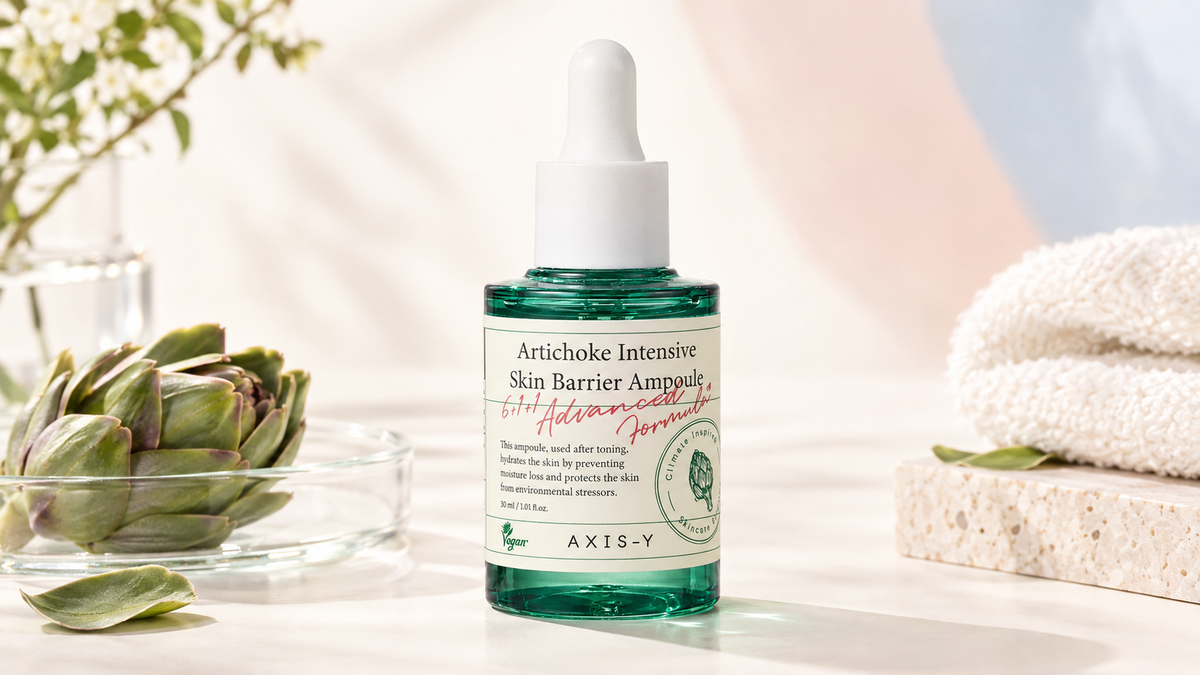
 AXIS-Y Artichoke Intensive Skin Barrier Ampoule Advanced Formula 30ml$12.0
 Bioderma Sébium Kerato+ Anti-Blemish High Tolerance Gel-Cream 30ml$18.0 $21.0
 Bioderma Créaline DS+ Cream Soothing Purifying Care 40ml$23.0
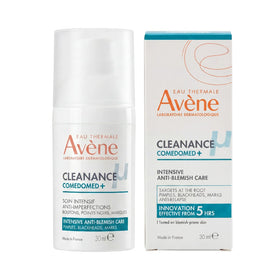
 Avène Cleanance Comedomed+ Intensive Anti-Blemish Care 30ml$24.8
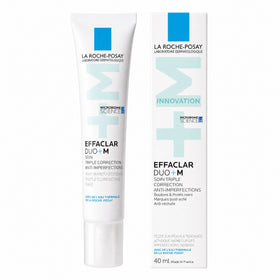
 La Roche-Posay Effaclar Duo+M Triple Corrective Care 40ml$18.8 $21.0
Consider how French skincare design incorporates active barrier support into clarifying regimens. In La Roche-Posay Effaclar Duo+M Triple Corrective Care 40ml, niacinamide is integrated alongside targeted exfoliating and balancing technologies to soothe the feel of the skin while visibly addressing the appearance of stubborn post-blemish marks. Bioderma Sébium Kerato+ Anti-Blemish High Tolerance Gel-Cream 30ml balances high-tolerance keratolytic agents with comforting ingredients to soften the appearance of irregularities without stripping the lipid matrix. For congested, comedone-prone complexions, Avène Cleanance Comedomed+ Intensive Anti-Blemish Care 30ml utilizes high-performance plant extracts paired with soothing thermal water to manage the appearance of surface imperfections. When severe flaking and redness occur across reactive zones, Bioderma Créaline DS+ Cream Soothing Purifying Care 40ml leverages purifying and calming agents to restore skin comfort. Meanwhile, external barrier replenishment can be bolstered by lightweight formulations such as AXIS-Y Artichoke Intensive Skin Barrier Ampoule Advanced Formula 30ml, which emphasizes structural hydration.
Strategic pairing and ingredient compatibility
A pervasive cosmetic myth suggests that niacinamide cannot be combined with pure ascorbic acid (vitamin C) due to the theoretical formation of a charge-transfer complex or the conversion of niacinamide into irritating nicotinic acid. While high-temperature, highly acidic laboratory environments can indeed force this hydrolysis over extended durations, modern cosmetic chemistries and standard room-temperature shelf conditions do not permit significant conversion. In practical skincare routines, niacinamide pairs exceptionally well with direct antioxidants, neutralizing free radicals while supporting endogenous lipid synthesis.
Similarly, pairing niacinamide with topical retinoids represents one of the most advantageous combinations in contemporary skincare. Retinoids operate by binding to nuclear retinoic acid receptors to accelerate epidermal turnover, a process that frequently triggers initial dryness, peeling, and barrier vulnerability. Applying niacinamide alongside retinoids proactively supports ceramide generation and fortifies the lipid bilayer, helping to maintain skin comfort during the retinoid adjustment period without attenuating receptor-mediated benefits. When combined with alpha hydroxy acids or salicylic acid, niacinamide acts as a calming physiological buffer, supporting effective chemical exfoliation while helping to preserve the critical moisture balance of the stratum corneum.
-
1. Cleanse with gentle surfactant base
Begin your morning or evening routine with a mild, non-stripping cleanser to remove surface impurities without disturbing the stratum corneum.
-
2. Apply clarifying or barrier treatments
Dispense a pea-sized amount of your targeted treatment, smoothing it evenly across the face to deliver active barrier and pore-refining support.
-
3. Layer targeted soothing care
Follow with a localized soothing cream over areas experiencing redness or dry patches to reinforce the intercellular lipid matrix.
-
4. Seal with broad-spectrum photoprotection
During the morning regimen, finish with a high-protection broad-spectrum sunscreen to safeguard newly reinforced skin cells from UV-induced degradation.
Navigating purity and pH stability
The chemical stability of niacinamide is notably superior to that of many other functional vitamins. Unlike L-ascorbic acid, which degrades rapidly upon exposure to light and atmospheric oxygen, niacinamide is remarkably stable across light, heat, and a wide pH spectrum. It retains its biochemical integrity comfortably between pH 4.0 and 7.0, allowing formulators immense flexibility when combining it with acidic peeling complexes or neutral hydrators.
The critical quality control parameter for topical niacinamide centers on residual nicotinic acid content. During the industrial synthesis of niacinamide, incomplete amidation or subsequent hydrolysis can leave trace amounts of free nicotinic acid within the raw material. Nicotinic acid binds to G-protein coupled receptors on epidermal Langerhans cells and dermal blood vessels, triggering prostaglandin-mediated vasodilation. This reaction, clinically recognized as the nicotinic acid flush, manifests as transient tingling, heat, and noticeable facial erythema. European dermo-cosmetic manufacturers utilize rigorous pharmaceutical-grade assays to guarantee negligible free nicotinic acid levels, ensuring that their completed formulas support skin comfort rather than initiating vascular reactive cascades.
Frequently asked questions
Can niacinamide be used twice daily on sensitive skin?
Yes. Because physiological concentrations of niacinamide (between two and five percent) reinforce the epidermal barrier rather than thinning the stratum corneum, the molecule is well tolerated for both morning and evening application.
Does niacinamide cause an initial skin purging phase?
No. Purging occurs when an ingredient accelerates basal cell turnover, bringing microcomedones to the surface prematurely. Niacinamide does not accelerate cellular turnover; any unexpected irritation or breakout is typically a reaction to vehicle excipients or excessive ingredient concentrations.
Can I safely layer niacinamide with chemical exfoliants?
Yes. Niacinamide can be layered with alpha or beta hydroxy acids without destabilization. In fact, niacinamide's ability to stimulate ceramide synthesis helps counteract the trans-epidermal water loss often associated with chemical exfoliation.
Why do some serums with high percentages cause skin flushing?
Flushing is typically triggered by trace amounts of free nicotinic acid present in high-percentage formulas, or by receptor-mediated microvascular dilation. Choosing balanced, pharmaceutical-grade formulations minimizes this risk entirely.
The enduring value of functional simplicity
In an industry frequently driven by fleeting novelty ingredients and aggressive percentage wars, niacinamide remains an indispensable cornerstone of intelligent skincare formulation. Its value does not stem from exotic marketing narratives, but from its undeniable biological utility as a cellular coenzyme precursor. By supporting the lipid barrier, encouraging a more balanced surface appearance, helping to visibly even skin tone, and sustaining baseline mitochondrial energy production, niacinamide addresses the foundational pillars of skin health simultaneously.
When approached through the lens of European pharmacy standards—where balanced dosing, high-purity raw materials, and physiological synergy take precedence over sensational claims—niacinamide achieves its highest expression. It is not an overnight cure, nor does it require extreme concentrations to demonstrate its worth. Rather, it is a disciplined, dependable active that quietly supports equilibrium within the complex living ecosystem of the human epidermis.