Article: Uriage Bariésun SPF50+ Cream: The Aquaspongines & Uriage Thermal Water Synergy
Uriage Bariésun SPF50+ Cream: The Aquaspongines & Uriage Thermal Water Synergy

The architecture of French sun defense
In the landscape of modern photoprotection, French pharmacy formulations have long occupied a distinct echelon. Where traditional sunscreens historically treated UV filters as solitary shields suspended in passive emulsion bases, contemporary dermatological science demands an active, physiological approach. Solar exposure is not merely an encounter with ultraviolet rays; it is a profound microenvironmental stressor that induces rapid trans-epidermal water loss, compromises the stratum corneum barrier, and initiates oxidative signaling cascades. Formulations emerging from French thermal water traditions view solar defense through this integrated lens, treating hydration, cellular defense, and UV absorption as mutually dependent mechanisms.
At the center of this protective philosophy sits the Uriage Bariésun SPF50+ Cream, a formula recognized for pairing broad-spectrum chemical and organic filters with an intrinsic water phase derived from the French Alps. Rather than relying on standard demineralized water as an inert vehicle, Uriage formulates with its unique, naturally isotonic thermal water. When combined with the proprietary Aquaspongines complex, this formulation operates not just as an exterior shield, but as an osmoprotective moisture reservoir designed to counteract the acute desiccation caused by direct sun, heat, and wind. Understanding the Aquaspongines mechanism requires examining how cellular hydration and lipid architecture respond dynamically to environmental heat stress.
The biology of solar-induced dehydration
Sunlight exerts an immediate physical and biochemical effect on the skin barrier. While ultraviolet B (UVB) photons primarily target cellular DNA in the epidermis and ultraviolet A (UVA) rays penetrate deeply to generate reactive oxygen species within dermal structures, infrared radiation and ambient solar heat drive acute moisture depletion. When skin temperature rises, the rate of perspiration increases, pulling essential water from deeper tissue layers toward the surface. Concurrently, ambient air and convective air currents accelerate the evaporation of surface water, precipitating sudden evaporative water loss that destabilizes the superficial corneocytes.
This rapid dehydration disrupts the delicate organization of intercellular lipid lamellae, which are composed of ceramides, cholesterol, and free fatty acids. As water departs the stratum corneum, the enzymatic activities responsible for desquamation and barrier maintenance falter. The result is familiar to anyone who has spent prolonged hours outdoors: skin that feels tight, parched, reactive, and brittle, even when severe erythema has been avoided. For dry and sensitive skin types, this evaporative cycle poses a substantial challenge. A standard high-protection sunscreen may prevent erythema, yet leave the cutaneous barrier parched and vulnerable. This makes the inclusion of active humectant and barrier-fortifying complexes essential for comprehensive photoprotection.
Uriage thermal water and the power of isotonicity
Originating in the crystalline heart of the Belledonne mountain range in the French Alps, Uriage Thermal Water undergoes an 80-year filtration journey through ancient geological strata before emerging at a protected source at an altitude of 422 meters. During this subterranean passage, the water dissolves and concentrates a dense array of mineral salts and trace elements, achieving a remarkable dry residue of 11,000 milligrams per liter. This mineral concentration renders Uriage Thermal Water exceptionally unique in dermatological care because it is naturally isotonic.
An isotonic solution possesses an osmotic pressure identical to that of physiological fluids, including blood plasma and intracellular cytoplasm. Most conventional spring waters and standard cosmetic water phases are hypotonic, possessing a lower concentration of dissolved solutes than human cells. When a hypotonic water is applied to the skin and allowed to evaporate freely, it can alter the osmotic equilibrium, occasionally drawing water out of superficial skin cells as it vaporizes. Conversely, an isotonic water respects the natural dimensions and volume of epidermal cells. Corneocytes bathed in isotonic thermal water neither swell through water influx nor collapse through osmotic shock; their structural equilibrium remains perfectly intact.
Beyond physical osmolarity, the elemental profile of Uriage Thermal Water contributes to a skin-compatible mineral environment. The water contains significant levels of calcium, which is associated with a feeling of skin comfort and resilience, as well as magnesium, appreciated for its skin-soothing sensory properties. Additionally, zinc, manganese, and copper are well-known cosmetic ingredients included to complement the overall skin-conditioning profile of the formula. By utilizing this active mineral solution as the foundation of Bariésun SPF50+ Cream, the formulation provides an environment that continuously nurtures the skin barrier.
The Aquaspongines complex: biomimetic osmoprotection
To complement the mineral composition of thermal water, Uriage developed the Aquaspongines complex, an intentional combination of physiological polyols and saccharides, most notably trehalose and glucose derivatives. In cosmetic science, humectants are often evaluated merely by their capacity to bind ambient atmospheric moisture, as seen with standard low-molecular-weight glycerin. However, under high-heat solar conditions, conventional humectants can struggle if environmental relative humidity is low, occasionally drawing water from deeper viable tissue layers rather than ambient air.
The Aquaspongines complex acts as an osmoprotective sponge that stabilizes the skin's hydration feel under conditions of acute thermal and osmotic stress. Trehalose, often referred to in botany as the resurrection sugar, is a naturally occurring disaccharide utilized by extremophile desert plants and microscopic organisms to survive prolonged periods of complete desiccation. When tissues experience severe dehydration, trehalose is understood to replace lost water molecules at the cellular interface, forming a hydrogen-bonded glass-like protective matrix around intracellular structures that helps maintain the appearance of suppleness and flexibility in the skin.
When formulated within the Bariésun SPF50+ Cream, Aquaspongines works alongside the naturally occurring minerals of Uriage Thermal Water to create an interconnected water-capturing network. The glucose and polyol molecules anchor themselves within the upper strata of the stratum corneum, creating hydrophilic zones that grasp water molecules tightly. This structured water lattice significantly slows down the kinetics of evaporative loss driven by outdoor heat. The skin maintains its elasticity, flexibility, and hydration reservoir even across extended outdoor exposure.
The synergy: barrier defense under broad-spectrum filtration
The structural efficacy of Uriage Bariésun SPF50+ Cream relies on the precise synergy between its biological hydration engine and its optical filtration architecture. UV filters perform best when distributed across a smooth, uniform surface. When skin is dehydrated, microscopic flaking and uneven micro-relief can cause topical sunscreen films to apply irregularly, leaving microscopic gaps where ultraviolet photons can penetrate directly to vulnerable basal cells. By utilizing the Aquaspongines and thermal water synergy, the formulation preserves surface smoothness and stratum corneum pliancy, facilitating a cohesive, uniform protective film.
Furthermore, Uriage incorporates targeted antioxidant ingredients to help support the skin's appearance against the visible effects of photo-oxidation. Exposure to UVA radiation is associated with the formation of reactive oxygen species that can affect the skin's natural lipids and contribute to barrier breakdown. The inclusion of vitamins C and E derivatives alongside thermal trace minerals provides well-established antioxidant cosmetic ingredients that contribute to the overall skin-conditioning environment of the formula throughout the day.
The sensory profile of this synergy is equally purposeful. While many deeply hydrating sunscreens resort to heavy, occlusive petroleum bases that feel greasy and suffocating, Bariésun SPF50+ Cream achieves enduring hydration through water-retaining osmoprotectants and balanced emollient esters. The result is a luminous, rich cream texture that melts smoothly across dry or reactive complexions, leaving no chalky residue, no chalky cast, and no heavy tackiness. It provides the nourishing comfort of a daytime barrier moisturizer with the stringent performance standards of modern European photoprotection.
Navigating European fluid and cream architectures
While the rich, hydro-retaining structure of Uriage Bariésun SPF50+ Cream represents an ideal option for dry, moisture-depleted, or sensitive skin profiles, European photoprotection encompasses diverse delivery architectures tailored to varied skin needs. For individuals who prefer an imperceptible finish or who navigate high humidity, ultra-light fluids offer an alternative balance of filtration and wearability.
Within this realm, formulations such as Bioderma Photoderm Aquafluide SPF50+ Invisible Sun Cream 40ml demonstrate the power of liquid-phase technology, providing very high broad-spectrum protection in a dry-touch, oil-free fluid consistency that suits combination and shine-prone complexions. For skin prone to blemishes, Vichy Capital Soleil UV-Clear Anti-Imperfections Water Fluid SPF 50+ – 40 ml offers an exceptionally lightweight aqueous matrix designed to deliver daily UV protection while respecting congested skin barriers. Meanwhile, individuals requiring dedicated physiological comfort for easily irritated complexions often explore Eucerin Sun Protection Sensitive Protect Sun Cream SPF 50+ 50ml, which emphasizes barrier stabilization and gentle tolerability.
Selecting the appropriate sunscreen architecture depends on matching your skin's barrier dynamics with your ambient environment. When cold winds, continuous sun, or inherent barrier compromise induce tightness and moisture depletion, the deeply replenishing thermal-osmotic mechanism of Uriage Bariésun SPF50+ Cream offers an enduring cushion of hydration that lightweight fluids are not designed to supply.
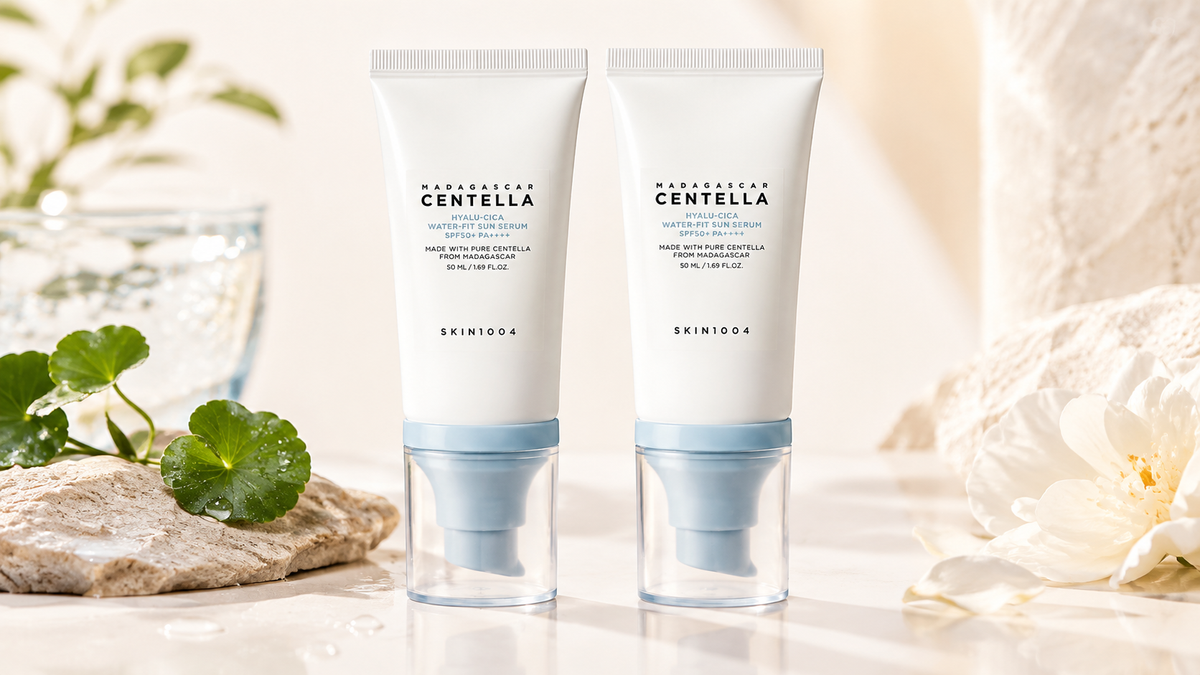
 SKIN1004 Madagascar Centella Hyalu-Cica Water-Fit Sun Serum Twin Pack 2 x 50 ml$22.5 $30.0
 Skin1004 Madagascar Centella Hyalu-Cica Silky-Fit Sun Stick SPF50+ PA++++ – Lightweight Invisible Sun Protection (20g)$14.5
 Vichy Capital Soleil UV-Clear Anti-Imperfections Water Fluid SPF 50+ – 40 ml$28.7 $34.0
 Bioderma Photoderm Aquafluide SPF50+ Invisible Sun Cream 40ml$21.0
 Eucerin Sun Protection Sensitive Protect Sun Cream SPF 50+ 50ml$23.0
How to apply Uriage Bariésun SPF50+ for optimal protection
Applying a high-protection sunscreen requires precision in both dosage and technique to ensure that the protective film forms an uninterrupted, uniform barrier across the facial landscape. Here is the recommended dermatological application sequence for daily wear.
-
1. Prep and hydrate skin
Cleanse gently and apply your morning serums or lightweight moisturizer, allowing them to absorb fully for two minutes before sun protection.
-
2. Measure the correct dose
Dispense a generous, measured amount—approximately two full finger-lengths or half a teaspoon—to sufficiently cover the face, neck, and ears.
-
3. Dot across the facial canvas
Distribute the cream evenly across the forehead, cheeks, nose, chin, and neck rather than rubbing it entirely between your palms first.
-
4. Smooth into a cohesive film
Gently smooth the cream outward with broad strokes, allowing the emulsion to settle into a uniform protective veil without aggressive friction.
-
5. Allow film formation before makeup
Wait three to five minutes for the volatile emulsion components to set and the protective matrix to bind before applying foundation or color cosmetics.
-
6. Reapply after exposure or swimming
Reapply every two hours during prolonged sun exposure, or immediately after towel drying, vigorous perspiration, or water immersion.
Frequently asked questions.
Frequently asked questions
What makes the Aquaspongines complex different from standard hyaluronic acid?
While hyaluronic acid is an exceptional macromolecular humectant that holds surface water, the Aquaspongines complex utilizes osmoprotective polyols like trehalose to preserve cellular membrane structure and reduce evaporative loss under direct thermal stress.
Is Uriage Bariésun SPF50+ Cream suitable for sensitive and reactive skin?
Yes, the formulation is developed with hypoallergenic standards and relies on naturally isotonic Uriage Thermal Water, which works in biological harmony with skin cells to minimize irritation.
Does the cream leave a white cast on deeper complexions?
Uriage Bariésun SPF50+ Cream uses modern, photostable chemical and organic filters that blend clear upon application, leaving a radiant finish without chalky residue.
Can this sunscreen be worn underneath daily makeup?
The formula serves as an excellent smoothing primer for makeup; simply allow the cream to set for three to five minutes so the protective film fully forms prior to applying cosmetics.
How does isotonic water benefit the skin during sun exposure?
Because its mineral concentration matches human cellular fluids, isotonic water hydrates without causing osmotic cell swelling or shrinking, maintaining steady barrier equilibrium during outdoor heat.