Homeoplasmine: why it’s a French pharmacy staple for irritated skin in cold weather
Alexey Kulik·
Homeoplasmine: why it’s a French pharmacy staple for irritated skin in cold weather
When temperatures drop, your skin barrier has to work overtime. Cold air holds less moisture, wind strips water from the surface faster, and indoor heating can push humidity even lower. The result is familiar: tightness, rough texture, flaky patches, and redness—especially on hands, lips, and any exposed areas.
In French pharmacies, one name often comes up in winter routines: Homeoplasmine. It’s traditionally used for skin irritation and is typically applied in a thin layer 1–3 times per day as directed on the label.
Below is a practical, neutral guide to why people reach for it in cold weather, how it fits into a barrier-protecting routine, and how to use it responsibly.
Why cold weather triggers irritation (and what “barrier support” really means)
Your outermost layer of skin—the stratum corneum—acts like a “brick-and-mortar” wall. In winter, several things can weaken it:
-
Low humidity → more water evaporates from skin
-
Wind → faster surface water loss + friction
-
Hot showers → can remove protective oils
-
Frequent handwashing/sanitizer → disrupts lipids
-
Chapped areas → micro-cracks that sting or look red
Barrier support isn’t about “curing” anything overnight. It’s about reducing water loss and shielding fragile skin so it can feel more comfortable while it recovers.
What Homeoplasmine is—and why it’s widely associated with French pharmacy culture
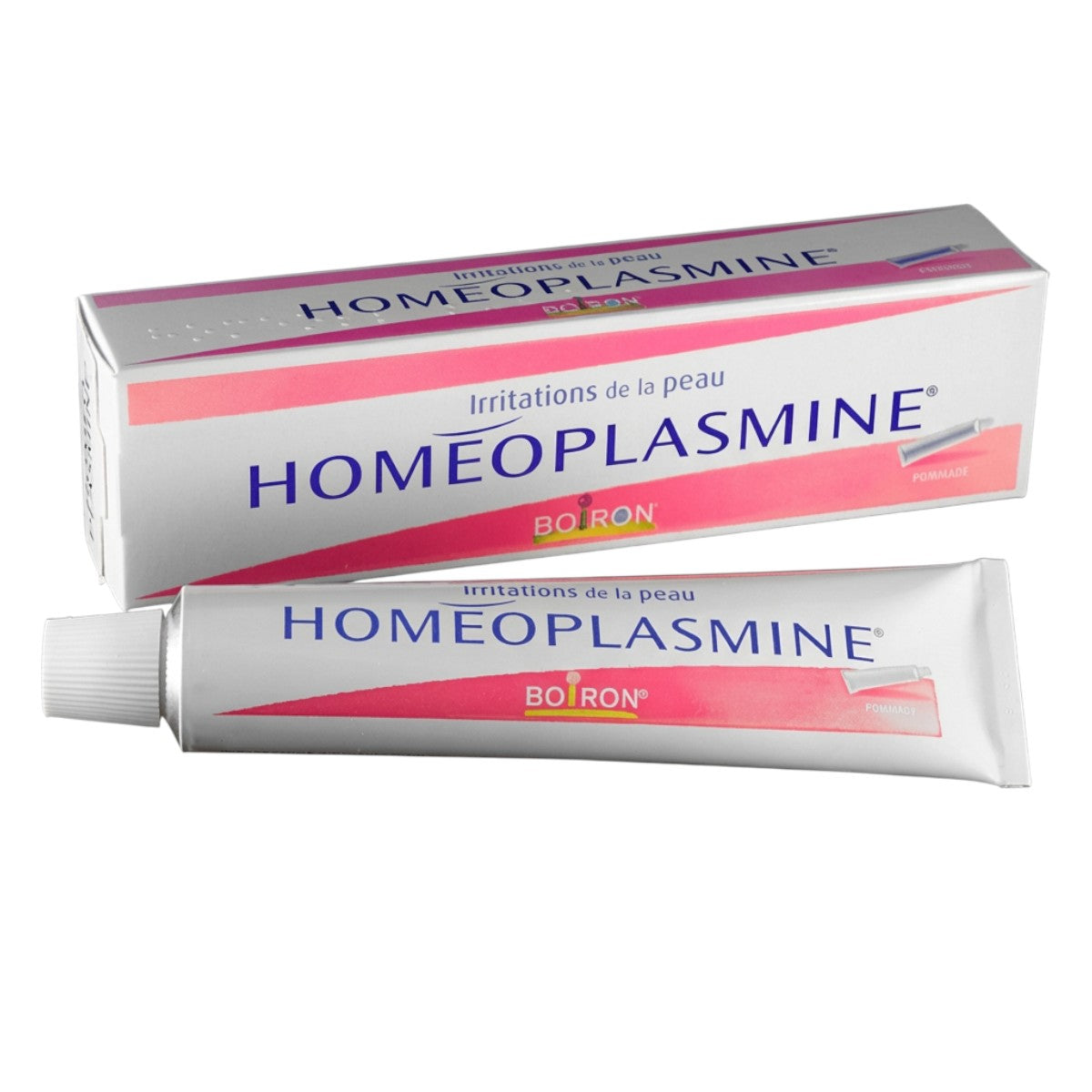
Homeoplasmine is a topical ointment made by Boiron and described in its leaflet as a homeopathic medicine traditionally used for skin irritations. Many people treat it as a winter “pharmacy staple” because it has a classic, no-fuss ointment feel and is often mentioned in French beauty and cold-weather skin routines.
If you’re using it, the most important E-E-A-T rule is simple: treat the label as the source of truth for usage and precautions (how often, where, and for whom). The Boiron guidance for use commonly states applying a thin layer 1 to 3 times daily.
How a protective ointment helps in winter: occlusion, comfort, and friction reduction
In cold weather, many people benefit from an ointment step because ointments tend to:
-
Create an occlusive film that slows water loss
-
Reduce friction on irritated spots (scarves, tissues, gloves)
-
Soften rough texture so skin feels less “pulled”
-
Support comfort when skin is tight, dry, or wind-exposed
Homeoplasmine is commonly described as petrolatum-based on retailer and ingredient references, and the idea is consistent with what occlusive ointments generally do: protect and buffer. (Even with a familiar product, always check your specific packaging/leaflet and ingredient list for your region.)
Best ways many people use it for cold, wind, and dryness (practical routine ideas)
Here are conservative, skin-barrier-friendly ways people often incorporate a protective ointment like this in winter:
-
After moisturizing, as a “seal” on top (PM routine)
-
Cleanse gently → apply a basic moisturizer → add a thin ointment layer to the areas that get irritated most.
-
-
Targeted “spot shielding” before going outdoors
-
Apply a very thin layer on exposed hotspots (knuckles, around the mouth, cheekbones) to reduce wind exposure and friction.
-
-
Hands: after every wash (or as often as realistic)
-
Moisturizer first, ointment only on the driest parts if needed (backs of hands, cuticles).
-
-
Avoid overdoing it
-
More isn’t always better—too thick can feel greasy and may increase clogged pores for some people.
-
And again: dosing on commonly available leaflets is thin layer, 1–3 times daily.
Mini-section: irritation around the nose during a cold (gentle, careful approach)
When you have a cold, the skin around the nostrils can look red and feel sore—not because the product treats the cold, but because wiping + moisture + friction can irritate the skin.
A careful, skin-first approach many people use:
-
Switch to soft tissues (and dab rather than rub when possible)
-
Apply a thin protective layer around the outside of the nostrils to reduce friction
-
Keep routines simple: gentle cleanser, basic moisturizer, then a protective ointment step if helpful
If you notice cracking, crusting, spreading redness, significant pain, or anything that looks infected, it’s a good reason to get medical advice rather than self-treat.
Safety notes: patch testing, label rules, and common-sense boundaries
Even “simple” ointments can cause irritation for some people.
-
Always read the leaflet/label and follow directions.
-
Some leaflets include age restrictions (e.g., not for children under 3 years in certain versions).
-
If used on the nipple area during breastfeeding, official guidance can include cleaning thoroughly before feeding.
-
Possible reactions listed in some leaflets include burning sensation, redness, eczema, or hypersensitivity reactions—stop use and seek advice if this happens.
-
Consider a patch test on a small area first if your skin is reactive.
FAQ (8)
1) Is Homeoplasmine a moisturizer?
It’s generally used more like a protective ointment than a lightweight moisturizer. Many people apply it over moisturizer to reduce water loss and friction.
2) How often do people apply it in winter?
Common leaflet directions describe applying a thin layer 1–3 times per day.
3) Can I use it for windburn?
Many people use protective ointments for wind-exposed irritation to shield the skin barrier. If windburn is severe (blistering, intense pain, rapid swelling), seek medical advice.
4) Is it okay for the skin around the nose when I have a cold?
Many people use a thin barrier layer to reduce friction from wiping. Keep it external (skin only), avoid pushing product into the nostrils, and stop if irritation worsens.
5) Will it fix cracked skin overnight?
It may improve comfort by protecting the area, but barrier recovery usually takes time + reduced irritation + consistent care.
6) Can it clog pores?
Any occlusive ointment can feel heavy on acne-prone areas. Many people keep it targeted (dry patches, hands) rather than all over the face.
7) Is it safe for everyone?
Not automatically. Labels/leaflets can include restrictions (including age limits in some versions) and warnings about hypersensitivity.
8) What if it stings when I apply it?
Mild tingling can happen on very irritated skin, but burning, redness, rash, or swelling can be a sign to stop and get advice.
How to choose a skin-protecting ointment
When comparing options (Homeoplasmine or alternatives), look for:
-
Occlusive base (often petrolatum-based) for strong barrier protection
-
Minimal fragrance/irritants if your skin is sensitive
-
Texture you’ll actually use (too greasy = you’ll skip it)
-
Clear label guidance for frequency, age use, and precautions
-
Your personal triggers (lanolin sensitivity, certain botanicals, etc.)
A simple rule: choose the gentlest formula that reliably reduces dryness and friction for you.
When to seek medical advice
Consider checking with a clinician (or pharmacist) if you have:
-
Rapidly worsening redness, heat, swelling, or significant pain
-
Cracks that won’t improve, bleeding, or oozing
-
A rash that spreads or looks infected
-
Severe eczema flares or recurrent dermatitis
-
Reactions after applying the product (burning, eczema-like rash, swelling)
-
Any uncertainty about use in young children (some leaflets specify age limits)
Disclaimer
This article is for general informational purposes only and does not replace medical advice. Homeoplasmine’s indications, directions, and precautions can vary by country and packaging—always read the label/leaflet and ask a pharmacist or clinician if you’re unsure.