Double Cleansing: Is the Two-Step Method Actually Necessary?
The double cleansing debate

In the ever-evolving world of skincare, rituals often arrive with a wave of enthusiasm that borders on the dogmatic. Among these, the two-step cleansing method has elevated itself from a specialized technique used by professional makeup artists to an everyday standard. We are told that a single wash is no longer sufficient to clear the day away, and that we must commit to a multi-tiered evening routine to achieve truly clean skin. Yet, as we strive for a flawless canvas, a quiet counter-movement has emerged within the classic French dermatological tradition. This perspective invites us to pause, look closely at the actual physiology of our skin, and ask a fundamental question: is double cleansing actually necessary for everyone, every single day, or have we fallen in love with an elaborate ritual at the expense of our skin's natural harmony?
At Upolife, we believe that skincare should be grounded in elegant pragmatism rather than rigid trends. The skin is a living, breathing organ equipped with its own protective mechanisms, and every step we introduce should support, rather than disrupt, this delicate ecosystem. To understand whether you truly need a two-step method, we must look past the marketing promises and examine the physical interactions occurring on the surface of your face. By understanding the nature of the impurities we encounter and the way modern cleansers interact with them, we can design a cleansing routine that is both highly effective and deeply respectful of the skin barrier.
Understanding the lipophilic barrier
To evaluate the necessity of a double cleanse, we must first understand the chemistry of what we are trying to remove. The surface of our skin is covered in a natural mixture of sebum, sweat, and environmental debris, often topped with layers of skincare products, sunscreens, and makeup. Many of these substances are lipophilic, meaning they are fat-loving and oil-soluble. Modern mineral sunscreens and long-wearing makeup formulas are specifically engineered to resist water and perspiration, adhering closely to the skin to provide lasting protection and coverage throughout the day. Consequently, simple water or a very weak water-based cleanser cannot easily dissolve these stubborn, oil-based bonds.
This chemical reality is where the logic of the double cleanse originates. The principle of like dissolves like dictates that an oil-based cleanser, micellar water, or lipid-rich balm is uniquely qualified to break down and lift away these lipophilic substances without requiring harsh scrubbing. By using a gentle first-step cleanser, you allow the oils to bind with the makeup and sebum on your face, lifting them effortlessly from the surface. A single, aggressive wash with a highly foaming, detergent-rich cleanser might eventually strip these substances away, but it often does so by compromising the essential lipids that keep your skin hydrated and protected.
The French pharmacy perspective
For decades, the French approach to skincare has championed a philosophy of minimal intervention and maximum respect for the skin's moisture barrier. Rather than resorting to aggressive scrubbing or harsh foaming agents, French formulation laboratories pioneered the concept of micellar water in the 1990s. This innovation was born out of a practical need: the tap water in Paris is notoriously hard and mineral-rich, which can easily sensitize and dry out the skin when paired with traditional soaps. The solution was a gentle, non-rinse cleansing water containing tiny micelles—microscopic spheres of surfactant molecules suspended in soft water.
These micelles act like tiny magnets, drawing out lipophilic impurities, makeup, and microscopic dust from the skin's surface while leaving the natural lipid barrier completely intact. In the French pharmacy tradition, cleansing is never viewed as an act of stripping the skin bare; instead, it is a delicate purification process. By prioritizing gentle, non-stripping formulas like those found in Bioderma and Avène, French skincare teaches us that we do not need to choose between cleanliness and comfort. A double cleanse, when performed with these sophisticated, barrier-respecting formulas, becomes a soothing ritual rather than a harsh stripping process.
Assessing your daily exposure
The answer to whether a double cleanse is necessary is not a simple yes or no; rather, it depends entirely on your daily environment, your lifestyle, and the products you wear. If your daily routine involves wearing water-resistant mineral sunscreen, silicone-based primers, foundations, or if you spend significant time outdoors in a bustling urban environment with high levels of airborne pollution, a single wash is rarely sufficient. In these scenarios, a two-step method is highly beneficial. The first step gently dissolves the heavy, protective layers of your daytime products, while the second step cleanses the actual skin beneath, removing any remaining residue and preparing it to absorb your nighttime serums and creams.
On the other hand, if you have spent your day indoors, wore no makeup, and applied only a light, non-water-resistant moisturizer or daily fluid sunscreen, a double cleanse is likely unnecessary and could even be counterproductive. Cleansing more than your skin actually requires can leave it feeling stripped and uncomfortable. When we cleanse beyond what the day calls for, we risk removing the natural oils that help keep your skin feeling soft, comfortable, and balanced—which can result in a feeling of tightness or a look of dullness. Therefore, the key is to remain flexible and adjust your cleansing routine based on what your skin actually experienced during the day.
The anatomy of the first step
When you do decide that a double cleanse is appropriate, the choice of your first-step cleanser is crucial. This step should never leave your skin feeling tight or dry. Instead, it should feel like a luxurious, comforting release. Traditional French micellar waters, such as the iconic Bioderma Sensibio H2O, are perfect for this role. They offer a highly efficient yet incredibly gentle way to sweep away makeup and daily grime without the need for vigorous rubbing. Because they do not require heavy rinsing with tap water, they help protect sensitive skin from the drying effects of hard water minerals.
Alternatively, those with very dry or mature skin may prefer a rich cleansing milk or a light, emulsifying oil. These lipid-rich formulas melt into the skin, binding with surface oils and makeup while delivering a comforting dose of nourishment. Whichever texture you choose for your first step, the goal remains the same: to break down the barrier of makeup, sunscreen, and daily pollution gently and completely, leaving a clean, undisturbed surface ready for a targeted second cleanse.
The role of the second wash
With the surface layers removed, the second step of your cleanse can focus on the skin itself. This step should be dedicated to a water-based, low-foaming, or non-foaming cleanser that respects the skin's natural pH. The ideal second cleanser is formulated with soothing, hydrating ingredients that comfort the skin rather than stripping it. French pharmacy favorites, such as the Avène Extremely Gentle Cleanser or the La Roche-Posay Toleriane Dermo-Cleanser, are specifically designed to cleanse the epidermis while preserving its delicate moisture balance.
During this second step, you can take a moment to gently massage the cleanser into your skin using circular, upward motions. This not only ensures a thorough cleanse but also encourages healthy circulation and brings a natural, healthy glow to the complexion. Because the heavy lifting of removing makeup and sunscreen was already accomplished by your first step, this second wash can be brief, gentle, and incredibly soothing. Once rinsed with lukewarm water, your skin should feel clean, soft, balanced, and perfectly primed for the rest of your evening skincare routine.
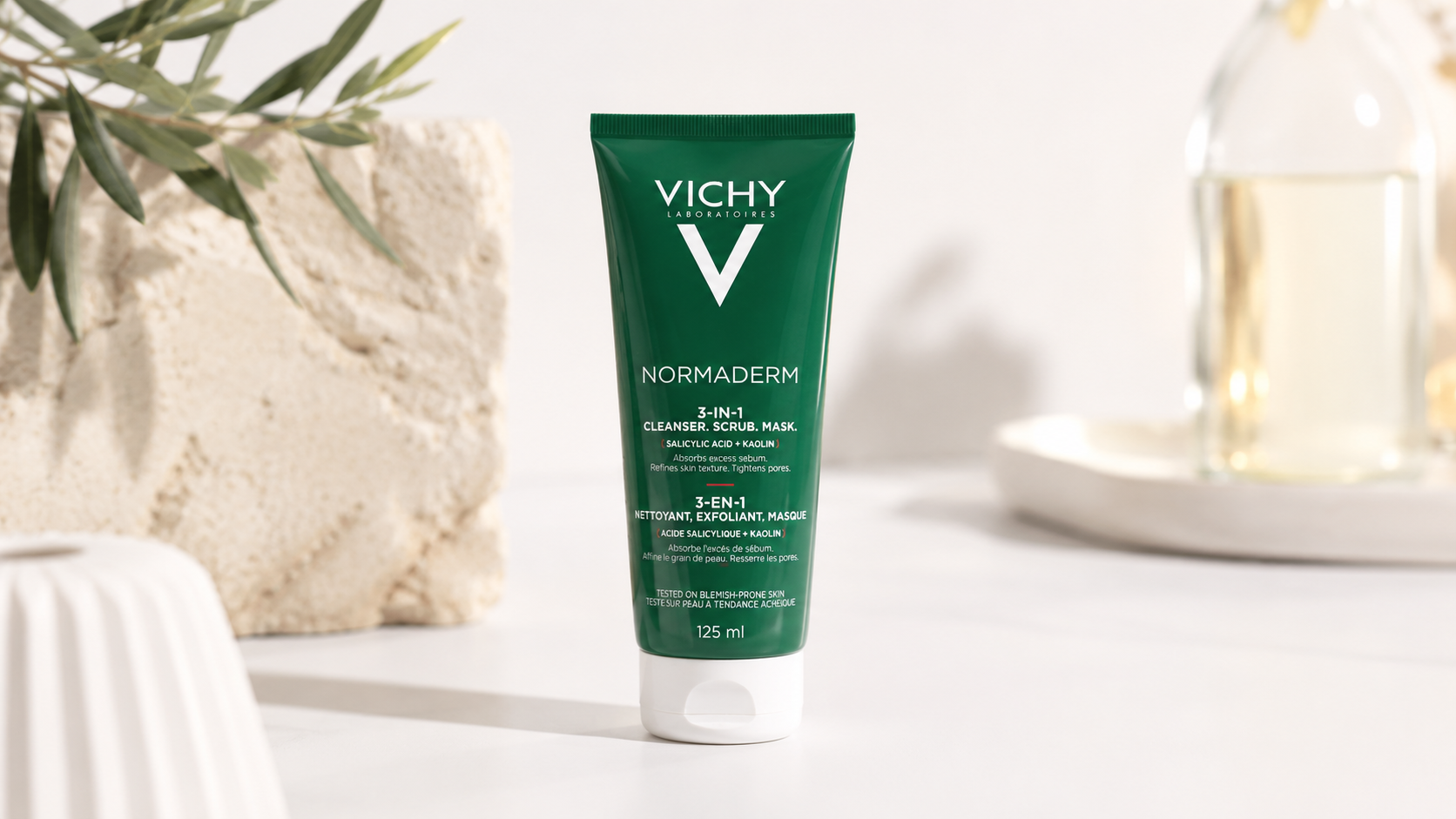
 Vichy Normaderm 3-in-1 Cleanser Scrub Mask 125 ml$23.0
 Biotherm Homme Aquapower Cleanser 125ml$24.48 $34.0
 La Roche-Posay Effaclar Purifying Foaming Gel 400ml$25.0
Finding your personal balance
Ultimately, the beauty of French skincare lies in its intuitive, personalized nature. There are no rigid rules that must be followed blindly. Instead, we encourage you to listen to your skin and observe how it responds to different environments and routines. If your skin feels tight, red, or unusually dry after a double cleanse, it may be a sign that you are over-cleansing, or that the products you are using are too aggressive for your skin type. Conversely, if you notice that your skin feels congested or that your nighttime moisturizers are not absorbing well, incorporating a gentle two-step method on the days you wear makeup or sunscreen could be the perfect adjustment.
By shifting our perspective from a strict multi-step obligation to a thoughtful, contextual practice, we can achieve beautiful, healthy skin without unnecessary irritation. At Upolife, we curate only the finest, dermatologically tested French pharmacy classics to ensure that whichever path you choose—whether a single, nourishing wash or a sophisticated, two-step ritual—your skin is always treated with the utmost gentleness and respect. Explore our collection of cult-favorite cleansers and discover the perfect balance for your unique complexion.
Frequently asked questions
Does double cleansing work for sensitive skin?
Yes, it can be highly beneficial for sensitive skin when performed with ultra-gentle, non-stripping French pharmacy formulas. Using a soothing micellar water followed by a rinse-free dermo-cleanser allows you to thoroughly remove impurities without the harsh friction or stripping surfactants that typically trigger sensitivity.
Is it safe to double cleanse every single night?
It is safe if your skin requires it due to daily makeup or heavy sunscreen use, and if you use exceptionally gentle products. However, if your skin is bare or you spent the day indoors, a single, high-quality, non-foaming cleanser is often sufficient and helps prevent over-cleansing.
Can I use the same cleanser twice instead of two different ones?
While you can, it is often less effective. The primary benefit of the two-step method relies on using different formulas: an oil-soluble or micellar cleanser first to dissolve stubborn makeup and sunscreen, followed by a water-soluble cleanser to clean the skin itself.
Do I need to double cleanse in the morning?
No, a double cleanse is highly unnecessary in the morning. Overnight, your skin only accumulates a small amount of sebum and nighttime skincare residue, which can easily be cleared with a splash of lukewarm water or a single, gentle swipe of micellar water.