
Article: The Myth of 'Non-Comedogenic' Products: What It Really Means for Your Skin
The Myth of 'Non-Comedogenic' Products: What It Really Means for Your Skin

The illusion of pore-safe labeling
If you have ever stood in a pharmacy aisle turning a cosmetic bottle over to hunt for the words non-comedogenic, you are in good company. For decades, beauty culture has treated those two hyphenated words as an absolute dermatological guarantee. The assumption is straightforward: if a cream or serum carries the non-comedogenic designation, it cannot physically clog your pores, trap sebum, or trigger a breakout. Conversely, any formula lacking the phrase is treated with immediate suspicion, presumed guilty until proven otherwise.
The reality within cosmetic science is considerably more nuanced, and perhaps slightly sobering. The claim of non-comedogenicity is neither a clinical guarantee nor an ironclad promise of clear skin. In practice, the term is largely an unregulated marketing standard built upon archaic animal testing models and modern human trials with inconsistent methodologies. Understanding why this label falls short does not mean abandoning hope for blemish-prone skin; rather, it empowers you to evaluate skincare formulations based on functional chemistry rather than hollow packaging assurances.
Origins in the rabbit ear model
To understand why modern comedogenicity ratings are fundamentally flawed, one must travel back to the late 1960s and 1970s. Dermatologist Albert Kligman and his contemporaries sought an objective way to determine whether specific cosmetic ingredients prompted follicular hyperkeratosis—the initial microcomedone formation that precedes visible acne. To test this hypothesis, researchers applied pure, unadulterated raw ingredients directly into the inner ear canal of albino rabbits.
The rabbit ear model was chosen because the inner ear tissue of a rabbit is exquisitely, hyper-realistically sensitive to irritation and follicular plugging. While this made the model adept at flagging potential irritants, it also produced an extraordinary volume of false positives. Ingredients that would never cause an issue on a human cheek—such as natural fatty alcohols, squalane, or light plant oils—triggered dramatic follicular impactions inside the ultra-delicate rabbit ear canal. Despite these physiological differences, early skincare lore immortalized these findings, generating zero-to-five scales that continue to populate internet graphics today.
When the industry gradually moved away from animal testing toward human testing, the primary method adopted was human repeat insult patch testing, often performed on the upper backs of participants. Yet testing concentrated raw materials sealed under an occlusive chamber on the human back still fails to replicate how a finished, multi-ingredient cosmetic behaves when layered on the dynamic sebaceous glands of the human face.
The critical flaw of ingredient isolate testing
The most pervasive misunderstanding in modern beauty culture is the belief that a product's pore-clogging potential can be calculated by scanning an ingredient list against an arbitrary zero-to-five comedogenicity table. Cosmetic chemistry does not function like a basic math problem. Ingredients do not exist in isolation on your skin; they exist within an intricately formulated matrix.
When a cosmetic chemist formulates an emulsion, the concentration, processing temperature, molecular weight, and interaction between surfactants, emulsifiers, and emollients completely alter how the individual components interact with your pores. An ingredient that scores high on a comedogenicity chart when applied in its pure, one-hundred-percent concentration may pose zero risk when suspended at a two-percent concentration inside a lightweight fluid. Treating an ingredient index as an infallible checklist ignores the fundamental physics of cosmetic formulation.
Furthermore, comedogenicity is deeply subjective. What causes follicular retention hyperkeratosis in one person's pore might rinse away cleanly or absorb effortlessly into another's. Factors such as baseline sebum production, environmental humidity, ambient pollution, and individual lipid composition dictate whether a lipid stays fluid or hardens into a keratinous plug.
Understanding the biology of comedogenesis
To look beyond marketing buzzwords, it helps to understand what a comedone actually is from a biological standpoint. The process begins deep inside the pilosebaceous unit with the formation of a microcomedone. Normally, epithelial cells lining the follicular infundibulum slough away gradually and are swept out to the skin surface by the continuous outward flow of liquid sebum.
Under certain conditions, this self-cleaning system falters. Keratinocytes fail to desquamate properly, sticking together to form a cohesive cellular plug known as retention hyperkeratosis. Concurrently, the sebum itself can undergo qualitative changes. When native sebum becomes rich in oxidized squalene and dense free fatty acids, its viscosity increases. This sluggish, oxidized lipid mixture combines with retained corneocytes, trapping bacteria and expanding the pore wall into an open comedone (blackhead) or closed comedone (whitehead).
The lack of official regulatory standards
Another crucial reality for consumers is that neither the United States Food and Drug Administration nor the European Commission enforces a legal, standardized definition for the term non-comedogenic. There is no universally mandated assay, no statutory control panel of participants, and no uniform threshold of follicular impaction that a brand must meet before printing the claim on an outer carton.
While reputable dermatological laboratories do conduct clinical in-use testing on acne-prone panels to support their claims, other manufacturers may perform minimal internal screening—or simply rely on raw material supplier data—to justify the language. Because the word carries significant commercial weight without binding legal accountability, relying on the label alone leaves you vulnerable to formula fatigue and unexpected breakouts.
French dermatological approaches to follicular health
Rather than obsessing over whether an aesthetic label appears on the front of a bottle, French pharmacy brands focus on supporting healthy desquamation, managing lipid oxidation, and preserving the integrity of the barrier. A formulation that maintains low cellular cohesion in the pore lining while respecting the stratum corneum will inherently prevent impactions, regardless of whether it wears a marketing badge.
Proper management of the pore environment requires an intentional, step-by-step framework: thorough yet non-stripping cleansing, targeted keratolytic support to accelerate desquamation, and light, barrier-supportive hydration that discourages sebum stagnation. French formulations excel in this balance because they prioritize tolerance and cellular harmony over aggressive drying agents.
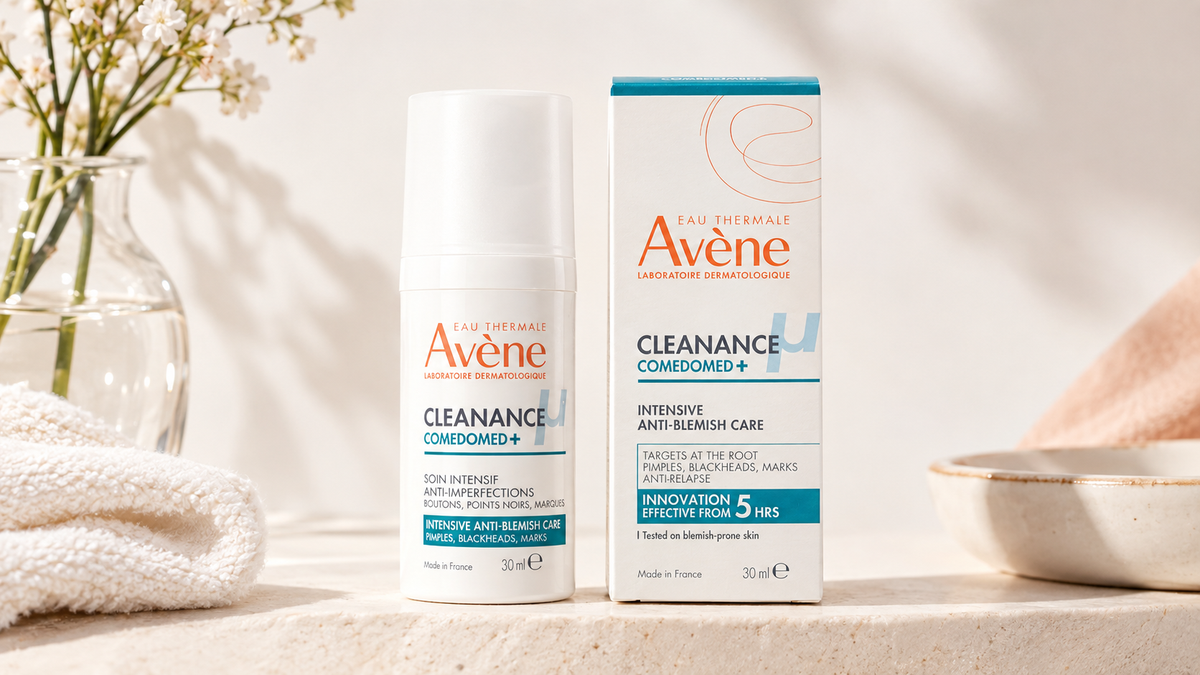
 Avène Cleanance Comedomed+ Intensive Anti-Blemish Care 30ml$24.8
 Bioderma Sébium Kerato+ Anti-Blemish High Tolerance Gel-Cream 30ml$18.0 $21.0
 Bioderma Sébium Exfoliating Purifying Gel 100ml – Unclogs & Smooths Oily/Combination Skin EXP:08/26$11.2 $21.0
 Bioderma Sébium Purifying Cleansing Foaming Gel 100ml$11.95 $15.0
 Vichy Normaderm 3-in-1 Cleanser Scrub Mask 125 ml$23.0
Building a functional routine that respects pores
Cleansing serves as the first non-negotiable step in maintaining follicular clarity. Aggressive degreasing with alkaline bar soaps or harsh detergents often backfires by irritating the follicular funnel, which accelerates compensatory hyperkeratosis. A gentle surfactant blend like Bioderma Sébium Purifying Cleansing Foaming Gel 100ml purifies excess lipid accumulation while maintaining skin comfort and physiological balance.
For skin that struggles with persistent texture and dull, surface-level keratin buildup, periodic mechanical and enzymatic refinement can help keep the pore orifice clear. Bioderma Sébium Exfoliating Purifying Gel 100ml – Unclogs & Smooths Oily/Combination Skin EXP:08/26 provides controlled physical and chemical exfoliation tailored specifically for combination complexions. Alternatively, a multifunctional product like Vichy Normaderm 3-in-1 Cleanser Scrub Mask 125 ml functions flexibly as a daily cleanser, targeted exfoliating scrub, or brief purifying mask to clear away stubborn surface debris.
When addressing persistent microcomedones beneath the surface, active leave-on treatments with well-calibrated keratolytics can be a valuable addition to a consistent routine. Bioderma Sébium Kerato+ Anti-Blemish High Tolerance Gel-Cream 30ml is formulated with gentle alpha and beta hydroxy acid derivatives to support the appearance of smoother skin texture and a visibly clearer complexion with continued use. In parallel, Avène Cleanance Comedomed+ Intensive Anti-Blemish Care 30ml offers a targeted, fast-absorbing texture with botanical and clinically inspired ingredients, designed to complement a routine focused on maintaining a clearer-looking, more balanced complexion over time.
How to evaluate a formula yourself
Moving past the non-comedogenic myth requires learning to read your skin's immediate and long-term feedback. When introducing a new emulsion, gel, or fluid to your regimen, keep a careful record of how your skin responds over a minimum of two to four weeks. Real follicular impactions take time to develop; an immediate inflammatory flush or tiny pustule within twelve hours is usually irritation rather than a genuine comedogenic event.
Examine the texture and weight of the product in your hands. Modern fluid formulations using lightweight emollients, volatile silicones, or biomimetic humectants like glycerin and hyaluronic acid allow skin to breathe naturally. If a product leaves a heavy, greasy film that feels smothering in your local climate, that tactile feedback is often far more informative than any marketing pledge stamped on the box.
Frequently asked questions
Does non-comedogenic mean a product will never cause breakouts?
No. The term is not legally regulated, and individual skin biology varies significantly. A product labeled non-comedogenic can still trigger breakouts if an individual reacts poorly to its specific emollient blend or overall formulation matrix.
Can I rely on online comedogenic rating scales?
Online comedogenicity charts are largely based on outdated 1970s rabbit ear assays or isolated raw ingredient tests. They do not account for modern formulation chemistry, low ingredient concentrations, or how finished products behave on human facial skin.
Why do some heavy creams not clog pores while light lotions might?
Pore clogging is driven by follicular hyperkeratosis and lipid oxidation rather than product thickness alone. A rich cream with stable, physiological lipids may support healthy desquamation, while a light lotion containing an irritating surfactant could induce swelling and impaction at the pore opening.
What is the best way to prevent clogged pores without relying on labels?
Focus on consistent, non-stripping cleansing, incorporate gentle keratolytics like salicylic acid or malic acid esters to keep follicular channels clear, and choose textures that suit your ambient environment and skin type.


