Salicylic Acid: The Original BHA Exfoliant — How It Clears Pores From Within
The chemistry of deep pore exfoliation

In the taxonomy of chemical exfoliants, few ingredients hold the enduring clinical credibility of salicylic acid. Long before multi-step routines and exotic fruit enzymes flooded vanity shelves, this understated beta hydroxy acid served as the foundational pillar of dermatological resurfacing. Synthesized historically from the bark of the white willow tree and refined through modern cosmetic chemistry, salicylic acid operates through an elegant, precise mechanism that distinguishes it entirely from superficial alpha hydroxy acids. It does not merely polish the surface; it journeys directly into the pore architecture to restore order where congestion originates.
To appreciate why salicylic acid commands such reverence among cosmetic formulators, one must first examine the micro-environment of the human pore. Pores are not passive openings; they are pilosebaceous units lined with epithelial cells and sustained by continuous sebum production. When dead corneocytes shed erratically within this microscopic canal, they combine with thick lipids, creating dense micro-plugs that oxidise and harden. While water-soluble acids flow around these oily blockages without penetrating them, salicylic acid behaves according to an entirely different set of chemical rules.
Why oil solubility changes everything
The fundamental difference between alpha hydroxy acids such as glycolic or lactic acid and salicylic acid lies in their molecular polarity. Glycolic acid possesses a hydroxyl group positioned on the alpha carbon, conferring hydrophilicity. It loves water and dissolves seamlessly across the hydrophilic upper layers of the stratum corneum, breaking the superficial intercellular cement. Salicylic acid, by contrast, possesses its hydroxyl group on the beta carbon, linked to an aromatic benzene ring. This distinctive configuration renders it fundamentally lipophilic, or oil-soluble.
Because it dissolves in lipids rather than water, salicylic acid does not bounce off the sebum that saturates congested pores. Instead, it utilizes the follicle's own lipid mantle as a conduit. Upon topical application, the molecule glides through the skin's surface sebum, traversing down the follicular ostium into the inner recesses of the pore lining. Once inside, it initiates a targeted desmolytic action, chemically loosening the protein junctions that bind compacted cells together in an oily suspension. By addressing the root physical structure of congestion, it clarifies the skin from within.
The mechanics of dissolving desmosomes
At the cellular level, the outer layer of skin maintains its architectural integrity through microscopic bridging structures called desmosomes. These specialized protein complexes weld corneocytes together like molecular mortar between bricks. In naturally exfoliated skin, hydrolytic enzymes break these bridges systematically, allowing individual dead cells to detach imperceptibly. However, in oily or congested complexions, excess lipid production and hyperkeratinization hinder this enzymatic release, anchoring clumps of dead cells firmly within the pore canal.
Salicylic acid functions as an exogenous keratolytic agent that specifically targets these stubborn bonds. By lowering intercellular pH and disrupting calcium-dependent adhesion proteins, it dissolves desmosomal linkages along the follicular walls. Rather than abrading the skin with physical grit, which can cause micro-fissures and provoke protective inflammation, salicylic acid promotes physiological desquamation. Compacted debris softens, breaks apart, and naturally flows outward along with daily sebum secretions, preventing the stagnant accumulation that leads to visible imperfections.
Beyond its pure keratolytic action, salicylic acid retains distinctive cosmetic properties inherited from its phenolic structure. Because it shares molecular kinship with the salicylate class of compounds, it is associated with a comfortable, gentle feel on the skin during exfoliation. This characteristic makes the exfoliation experience feel noticeably more comfortable compared to other low-pH resurfacing agents, and many users with reactive skin find it a pleasant fit within their routines.
Formulation balance and the importance of pH
The biological activity of salicylic acid is exquisitely sensitive to formulation chemistry, particularly the ambient pH of the finished vehicle. In solution, salicylic acid exists in a dynamic equilibrium between two states: the un-ionized free acid form and the ionized salicylate form. The pKa of salicylic acid is approximately 2.97. According to basic biochemical kinetics, when the pH of a formula matches its pKa, exactly fifty percent of the acid exists in its active, un-ionized free acid state—the state capable of freely migrating across lipid membranes.
If a formulation is buffered to a pH significantly above 4.0, the vast majority of the salicylic acid ionizes, losing its lipophilic permeability and significantly reducing its ability to dissolve deep within follicular pores. Conversely, driving the pH far below 3.0 increases penetration so dramatically that the formula risks inducing stinging and barrier disruption. Exceptional cosmetic laboratories operate within the optimal thermodynamic window: between pH 3.2 and 4.0, calibrated alongside complementary humectants and barrier-reinforcing lipids to maximize clarity while preserving the microbiome.
The French pharmacy approach to balance
The conventional American impulse toward exfoliation has historically tilted toward aggressive over-correction: higher percentages, stripping astringents, and squeaky-clean sensations that ultimately trigger compensatory oil production. French dermo-cosmetic houses approach the problem from the polar opposite direction, adhering to the philosophy that clarifying actions must always be buffered by soothing, reparative counterweights to keep the acid mantle intact.
In Parisian and thermal valley laboratories, salicylic acid is rarely formulated as an isolated hero ingredient. Instead, it is paired with mineral-rich thermal spring waters, physiological lipids, and botanical extracts that modulate the skin's surface ecology. Formulas like Vichy Normaderm 3-in-1 Cleanser Scrub Mask 125 ml leverage this balanced philosophy, combining purifying mineral clays with targeted keratolytics to gently absorb excess shine and exfoliate without stripping essential moisture reserves.
Similarly, modern leave-on treatments focus on physiological equilibrium rather than raw chemical assault. La Roche-Posay Effaclar Duo+M Triple Corrective Care 40ml pairs targeted keratolytics with soothing ingredients and barrier-supportive lipids, addressing uneven texture, visible pores, and post-congestion marks simultaneously. Meanwhile, Avène Cleanance Comedomed+ Intensive Anti-Blemish Care 30ml approaches clarifying routines through ultra-lightweight emulsions enriched with thermal spring water, demonstrating that persistent pore refinement does not require sacrificing skin comfort.
Extending pore clarity to the scalp
While conversation around salicylic acid almost exclusively centers on facial aesthetics, the physiological machinery of the scalp is virtually identical. The scalp is densely populated by oversized sebaceous glands and hair follicles that shed corneocytes continuously under a dense canopy of hair. When excess sebum binds with normal surface yeasts and shedding dead cells, the result is localized scaling, discomfort, and noticeable follicular congestion.
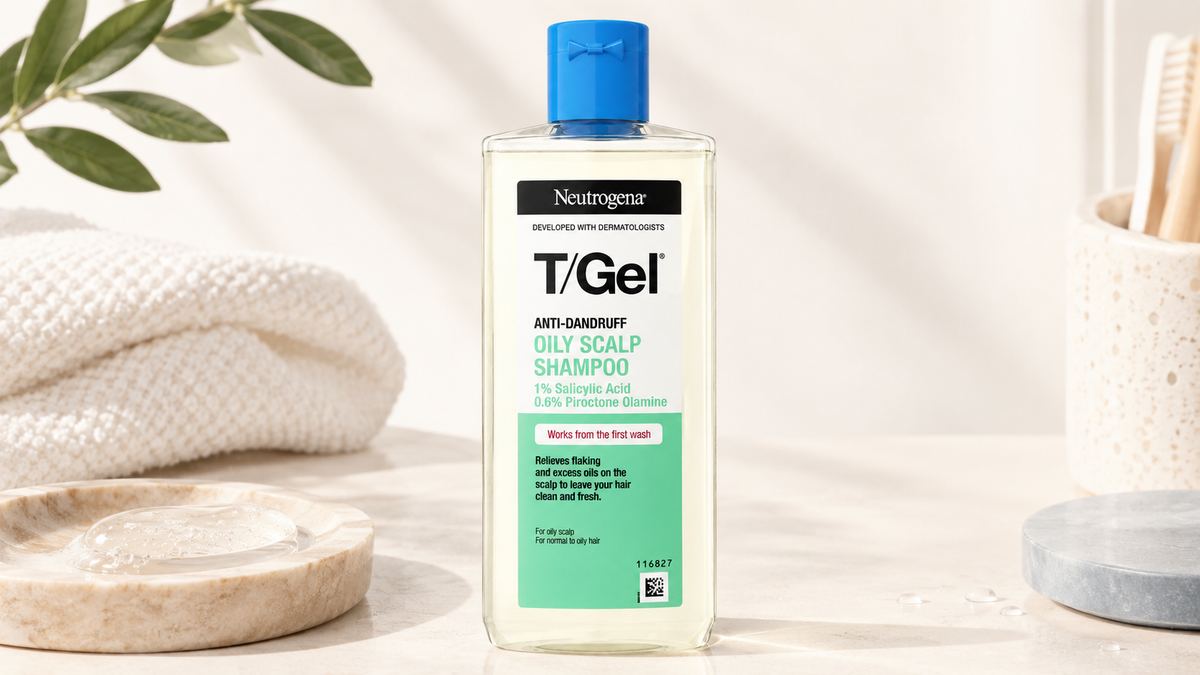
Rinse-off scalp formulations harness the identical lipophilic mechanism of beta hydroxy acids to dissolve sticky sebum deposits at the hair roots. A targeted treatment such as Neutrogena T/Gel Anti-Dandruff Oily Scalp Shampoo 1% Salicylic Acid 250ml uses this precise 1% keratolytic concentration to lift stubborn scales and break down oily follicular build-up without stripping the hair fiber itself. By clearing the follicular ostia on the scalp, salicylic acid restores lightweight volume, clarity, and sustained scalp comfort.
 Neutrogena T/Gel Anti-Dandruff Oily Scalp Shampoo 1% Salicylic Acid 250ml$14.4 $21.0
 Vichy Normaderm 3-in-1 Cleanser Scrub Mask 125 ml$23.0
 La Roche-Posay Effaclar Duo+M Triple Corrective Care 40ml$18.8 $21.0
 Avène Cleanance Comedomed+ Intensive Anti-Blemish Care 30ml$24.8
Comparing keratolytics across categories
Selecting the right chemical exfoliant requires understanding where each molecular family performs its primary work. While salicylic acid remains unmatched for follicular penetration, other keratolytics provide complementary actions across different strata of the skin. Water-soluble alpha hydroxy acids like glycolic acid excel at retexturizing sun-damaged, dry surfaces by loosening corneocyte adhesion on the uppermost stratum corneum, yet their hydrophilic nature prevents them from dissolving follicular oil.
Polyhydroxy acids, such as gluconolactone and lactobionic acid, feature larger molecular footprints with multiple hydroxyl groups. Because their bulkier size slows down epidermal absorption, they provide exceptionally mild surface retexturizing accompanied by profound humectant hydration, making them ideal for barrier-compromised skin. Lipo-hydroxy acid, a distinct derivative of salicylic acid with an extended lipid tail, penetrates more gradually than traditional salicylic acid, offering a microscopic, cell-by-cell desquamation suited for ultra-sensitive complexions.
-
1. Cleanse with a mild surfactant
Wash the face using a gentle, non-stripping cleanser and lukewarm water to remove ambient pollution without depleting the stratum corneum.
-
2. Ensure skin is completely dry
Wait several minutes after cleansing before applying active exfoliants, as damp skin enhances acid permeability and may increase trans-epidermal irritation.
-
3. Apply targeted salicylic acid
Smooth a thin, uniform layer across congested areas or the entire face, avoiding direct contact with the delicate eye contours.
-
4. Layer a restorative moisturizer
Follow with a comforting emulsion rich in ceramides, squalane, or thermal water to lock in hydration and buffer epidermal integrity.
-
5. Maintain rigorous daytime photoprotection
Apply a broad-spectrum sunscreen every morning to shield newly revealed skin cells from daily UV damage.
Maximizing results while protecting the barrier
Achieving clear, radiant skin with salicylic acid is not an exercise in speed; it is an exercise in pacing. Because the acid works continuously within the pore lining, over-frequent application or combining multiple strong exfoliants in a single session can strip intercellular lipids faster than keratinocytes can synthesize replacements. When the moisture barrier is compromised, skin often compensates by accelerating sebum output, ironically reviving the very congestion one sought to eliminate.
For most skin types, incorporating a leave-on BHA treatment two to three evenings per week is more than sufficient to sustain micro-exfoliation and maintain pore clarity. On alternate evenings, the skin should be replenished with simple, nourishing hydration, lipid-replenishing balms, and soothing botanicals. By respecting the natural twenty-eight-day epidermal turnover cycle, you allow salicylic acid to operate at peak biological efficiency, revealing a smooth, balanced canvas that remains resilient against daily environmental stressors.
Frequently asked questions
How often should salicylic acid be used?
Begin with two to three applications per week in the evening to evaluate skin tolerance. Depending on formulation strength and individual oil production, application can be maintained at this rhythm or gradually increased to alternate days.
Can salicylic acid cause temporary skin purging?
Yes, because salicylic acid accelerates the desquamation process, micro-comedones already developing deep within the pore can surface more rapidly during the first few weeks of consistent use. This phase typically settles within four to six weeks.
Can salicylic acid be paired with retinoids?
While both ingredients promote cellular turnover, using them simultaneously in the same evening routine can compromise the lipid barrier and cause dryness. It is generally best to alternate nights or apply salicylic acid in the morning and a retinoid at night.
Is salicylic acid suitable for dry skin types?
Although salicylic acid is primarily prized for its oil-solubility, dry skin with localized congestion or visible texture can still benefit from targeted wash-off formulations or gentle leave-on solutions buffered with hydrating agents.