The Scalp Scrub Myth: Why Exfoliating Your Scalp Might Be Doing More Harm Than Good

The physical exfoliation obsession
In the quest for immaculate hair, the beauty industry has borrowed heavily from skincare playbooks, introducing us to an array of elaborate routines designed to polish, prime, and perfect. Among these, the physical scalp scrub has emerged as a modern vanity staple. The promise is undeniably alluring: a gritty, satisfying paste that sweeps away styling residue, dry flakes, and excess sebum, leaving behind a clean canvas. We have been conditioned to believe that a deep, mechanical scrub is the ultimate act of self-care for our hair roots. However, this tactile satisfaction often masks a more complex reality. While the immediate sensation of a freshly scrubbed scalp feels rejuvenating, the physical friction required to work these gritty particles through a dense forest of hair can disrupt the very foundation of hair health. Rather than delivering a pristine environment, these abrasive formulations can compromise the delicate surface of your skin, leading to a cycle of dryness and imbalance that defeats the original purpose of your routine.
Understanding the scalp barrier
To understand why physical exfoliation can be so problematic, we must first look at the unique characteristics of the scalp barrier. Unlike the skin on our faces, the scalp is home to a dense concentration of large hair follicles, sebaceous glands, and a delicate microbiome that thrives in a specific, slightly acidic environment. This natural barrier is incredibly resilient, yet it relies on a precise balance of lipids and moisture to maintain its integrity. When we introduce heavy physical exfoliants, such as coarse sugar crystals, salt grains, or crushed seed shells, we are applying intense mechanical friction directly to this delicate ecosystem. This friction does not just target loose buildup; it also shears away the vital lipid layers that keep moisture locked in. When this protective envelope is compromised, the scalp becomes vulnerable to environmental stressors, leading to a tight, uncomfortable sensation that many mistake for cleanliness but is actually a sign of barrier distress.
The friction problem
The mechanics of scrubbing also present a physical challenge that is unique to the head. When you apply a facial scrub, your fingers move across a relatively flat, unobstructed surface. On the scalp, however, those same abrasive particles must navigate through hundreds of thousands of hair shafts. As you massage the product in, the grit inevitably catches on the delicate roots of your hair. This creates a sanding effect, where the abrasive particles are dragged repeatedly against the hair cuticles and the scalp surface. Instead of a clean, even exfoliation, you often end up with micro-tears in the skin and mechanical stress on the hair shafts themselves. This friction can weaken the hair at the root, leading to dullness and styling vulnerability. The hair acts as a barrier that prevents the scrub from reaching the skin evenly, resulting in over-exfoliation in some spots and completely missed areas in others.
Why scrubs feel good but do bad
One of the most common reasons people search for answers to the question of whether scalp scrubs work is the frustrating cycle of rapid oil production. It is a classic beauty trap: you notice your hair feels greasy or weighed down, so you reach for a heavy scrub to strip away the excess sebum. For a few hours, your hair feels light and airy. However, the scalp is a highly responsive organ. When physical scrubs aggressively strip away the natural sebum, the scalp can quickly appear oilier than before as it works to restore its surface balance. Within a day or two, your hair feels greasier than before, prompting you to scrub again. This creates an ongoing loop of stripping and rebalancing, leaving you with a compromised barrier and hair that never seems to stay balanced.

The French pharmacy approach
In contrast to the aggressive scrubbing trends popular in some beauty circles, the classic French pharmacy tradition has long championed a far more respectful, minimalist approach to scalp care. In France, the scalp is treated with the exact same tenderness and sophistication as the face. French dermatological brands recognize that a healthy head of hair begins with a calm, balanced foundation, not one that is repeatedly scrubbed and stripped. Instead of mechanical force, French formulations rely on ultra-gentle, fluid textures, soothing botanical extracts, and advanced micellar technologies. These products are designed to lift away excess oil, pollution, and product buildup without ever disrupting the natural lipid barrier. By prioritizing comfort and physiological balance, the French approach helps you achieve clean, vibrant hair through nurturing rather than stripping.
 Ducray Anaphase Creastim Scalp Lotion – 60 ml$51.0 $59.0
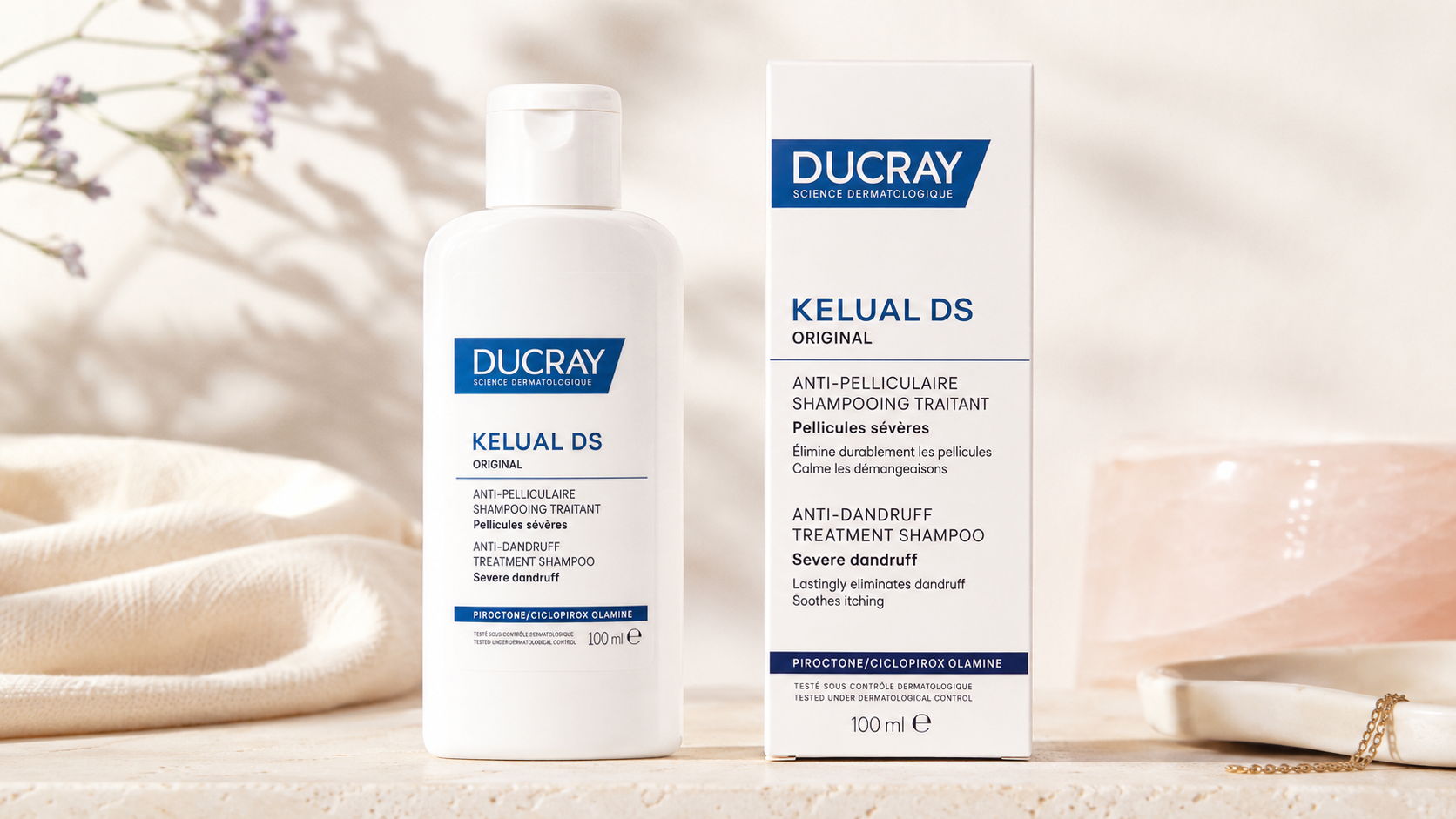
 Ducray Kelual DS Anti-Dandruff Treatment Shampoo Original 100ml$28.0
 Bioderma Nodé DS+ Intense Anti-Dandruff Shampoo 125ml$20.0 $24.0
 Vichy Dercos Technique Anti-Dandruff DS Shampoo Normal to Oily Hair 390 ml$26.4 $29.5
 Neutrogena T/Gel Anti-Dandruff Oily Scalp Shampoo 1% Salicylic Acid 250ml$14.4 $21.0
How to transition away from scrubs
To transition away from harsh physical scrubs, the first step is embracing the power of double cleansing with ultra-gentle, non-detergent liquid formulas. A gentle first wash removes surface styling products and pollution, while a second, targeted wash cleanses the scalp itself. During this process, physical force should be entirely replaced by the soft, rhythmic pressure of your fingertips. By using the pads of your fingers—never your nails—in slow, circular motions, you can help loosen buildup and encourage a refreshed, comfortable feeling at the scalp without causing micro-tears in the skin. This simple technique, combined with a high-quality, pH-balanced French shampoo, provides all the cleansing your scalp needs while preserving the integrity of its natural protective barrier.
The power of acidic rinses
Another elegant alternative to physical scrubbing is the traditional French practice of using acidic botanical rinses, often formulated with vinegar or fruit acids. These fluid rinses work on a completely different principle than physical exfoliants. Rather than tearing at the skin with grit, a vinegar rinse gently lowers the pH of the hair and scalp, which naturally helps to dissolve dulling mineral buildup from hard water and smooth down the hair cuticles. This chemical action leaves the hair exceptionally shiny and soft, while leaving the scalp feeling refreshed and light. Because these rinses are completely liquid, they rinse away effortlessly without leaving any gritty residue trapped in your hair or causing mechanical friction at the roots.
A shift toward gentle care
Embracing a gentler routine also means paying close attention to the soothing pre-shampoo treatments that have been a staple of French hair rituals for decades. These lightweight fluids and botanical oils are applied directly to a dry or damp scalp before washing. Infused with comforting ingredients like cold-pressed oils, mint, or eucalyptus, they help to loosen impurities and soothe the skin before the cleansing process even begins. This pre-treatment step ensures that when you do shampoo, the buildup lifts away effortlessly with minimal friction. It is a sophisticated, preventative way to care for your scalp that respects its natural biology, ensuring your hair remains naturally radiant, soft, and balanced from root to tip.
Frequently asked questions
Do scalp scrubs work to remove buildup?
While they can physically remove surface buildup, the mechanical friction often causes micro-tears and strips the natural lipid barrier, leading to dryness and rebound oiliness.
How should I clean my scalp without a scrub?
Opt for a double cleanse using an ultra-gentle, non-detergent French shampoo, and massage your scalp gently with the pads of your fingertips rather than using physical grit.
Can I use a vinegar rinse instead of an exfoliant?
Yes, traditional French vinegar rinses naturally help dissolve styling residue and mineral buildup from hard water by balancing the pH, leaving hair shiny without physical friction.
How often should I use a pre-shampoo treatment?
A soothing, botanical pre-shampoo fluid can be used once or twice a week to help loosen impurities and prime the scalp for a gentle wash.