Thermal Water: More Than Just H2O for Sensitive Skin

The mineral architecture of French thermal spring water
To dismiss French thermal water as simply overpriced tap water in an aerosol canister is to misunderstand the geology and physics of deep subterranean springs. Long before skin-barrier physiology became a mainstay of contemporary cosmetic conversation, nineteenth-century French hydrotherapy centers had already documented the tangible soothing effects of natural spring waters sourced directly from regional thermal basins across France. What emerges at the surface of these protected geological sites is not generic H2O, but a chemically distinct solution that has spent decades, often centuries, filtering through mineral-dense rock formations, deep granite fissures, and dolomitic limestone. Along this protracted subterranean journey, the water acquires an unrepeatable ionic signature comprised of dissolved trace elements, bicarbonate salts, silica, and microflora metabolites that cannot be replicated in a municipal laboratory.
The fundamental difference between demineralized water and authentic thermal spring water lies in osmolarity and mineral ratios. Standard tap water contains erratic concentrations of chlorine, calcium carbonates, and harsh heavy metals that can elevate cutaneous pH and degrade the delicate intercellular lipid matrix of sensitive skin. Thermal water, by contrast, possesses a stable physicochemical profile that is naturally filtered and bacteriologically pure at the point of emergence. When fine micro-droplets settle across reactive epidermal tissue, they do not function as passive moisture; rather, their dissolved mineral constituents interact directly with cellular membrane potentials, enzymatic pathways, and surface lipid organization to restore balance to stressed skin.
The cellular mechanism: how trace minerals interact with the stratum corneum
Understanding why thermal water soothes compromised epidermal barriers requires looking closely at its ionic interactions within the stratum corneum. The uppermost layers of the epidermis rely on a delicate chemical equilibrium where divalent cations, such as calcium and magnesium, regulate essential enzymatic activity. Calcium ions act as primary messengers in epidermal differentiation; when barrier disruption occurs, a sudden drop in the extracellular calcium gradient triggers lamellar body secretion, prompting the skin to synthesize fresh ceramides, cholesterol, and free fatty acids. Applying a mineral mist balanced in calcium helps support this natural signaling cascade without over-saturating the tissue or prompting mechanical friction.
Simultaneously, magnesium plays an indispensable role as an enzymatic cofactor in skin lipid biosynthesis and cell renewal. In reactive, redness-prone skin, magnesium ions are associated with a more comfortable surface feel, helping to ease the appearance of redness and the subjective sensation of sensitivity. The ratio between calcium and magnesium is critical: when these two minerals exist in a biological harmony similar to natural cellular fluids, they reinforce cellular cohesion and help fortify the corneocyte envelope against environmental irritants. Rather than merely dampening the skin surface, the ionic matrix actively interfaces with the biochemical processes responsible for cutaneous resilience.
Trace elements like selenium, zinc, and strontium introduce an additional tier of defense against oxidative and environmental aggressors. Selenium is an indispensable constituent of glutathione peroxidase, an endogenous antioxidant enzyme responsible for neutralizing lipid peroxides and shielding vulnerable cell membranes from oxidative degradation caused by ultraviolet exposure and metropolitan pollution. Strontium and zinc, meanwhile, are well-documented for their ability to support a calmer-looking complexion and ease the appearance of visible redness. By contributing to a more balanced surface environment, these trace ions help comfort the sudden hot, sensitized feelings characteristic of hypersensitive, reactive skin types.
Silica and the colloidal protective veil
Beyond dissolved ionic salts, certain thermal waters are renowned for their high concentration of colloidal silica. Silica does not merely evaporate away; instead, it leaves behind an imperceptible, non-occlusive mineral film that blankets the skin surface. This microscopic veil serves as a protective cushion against ambient friction, wind, and airborne pollutants, creating a calmer environment under which recovering epidermis can rebuild its structural integrity.
This silicious shield also imparts a distinctive tactile softness, counteracting the tightness that typically accompanies post-cleansing water evaporation. In hyper-reactive or post-procedure complexions where conventional emulsions and thick creams might induce stinging or occlusion-related heat retention, a fine mist rich in silica offers physical comfort without occluding porous follicular openings or introducing synthetic emulsifiers that sensitive skin often rejects.
The physics of evaporation: why application technique matters
A frequent criticism among skincare skeptics is that water mists ultimately leave the skin drier than before application. This observation is grounded in basic thermodynamics: when pure water is sprayed onto the face and allowed to evaporate completely in an environment with low ambient humidity, it draws moisture out of the stratum corneum via trans-epidermal water loss. The physical process of evaporation demands energy, and as liquid water molecules transition into water vapor, they pull latent water from the superficial layers of the epidermis, an unintended outcome known as flash dehydration.
To reap the full physiological benefits of thermal mineral water, one must master the physical mechanics of application. The mineral deposition occurs within the first one to two minutes of contact, during which trace elements diffuse into the intercellular matrix. Allowing droplets to sit indefinitely until bone-dry reverses that hydration benefit. The professional French pharmacy protocol requires misting generously, allowing the minerals thirty to sixty seconds to settle into the tissue, and then gently blotting away excess pooled surface moisture with a clean cotton cloth before immediately locking in the hydration with a lipid-rich cream or restorative balm.
-
1. Mist generously over clean skin
Hold the spray nozzle approximately eight inches from your face and apply a sweeping, generous veil across your entire complexion, neck, and décolletage.
-
2. Allow minerals to interact
Leave the fine micro-droplets undisturbed for thirty to sixty seconds, permitting trace ions, calcium, and silica to settle across the epidermal surface.
-
3. Blot excess surface moisture
Press a soft, clean cotton tissue or clean cloth gently across your face to lift unabsorbed pooling water, preventing the risk of flash evaporation.
-
4. Lock in hydration immediately
While the skin remains damp and cool, smooth a protective emollient or restorative barrier cream over the face to seal in dissolved minerals and stop moisture loss.
Pairing thermal mist with targeted barrier balms and emollients
Thermal water operates at its highest cosmetic potential when integrated as the priming liquid phase within a cohesive barrier-repair routine. Applying an emollient or occlusive over dehydrated skin can trap dryness underneath; conversely, pairing mineral-saturated skin with a targeted balm creates a synergistic hydro-lipid barrier that preserves epidermal suppleness. When the stratum corneum is primed with mineral ions, subsequent restorative ingredients can disperse evenly across the skin surface without dragging or creating unnecessary mechanical tension.
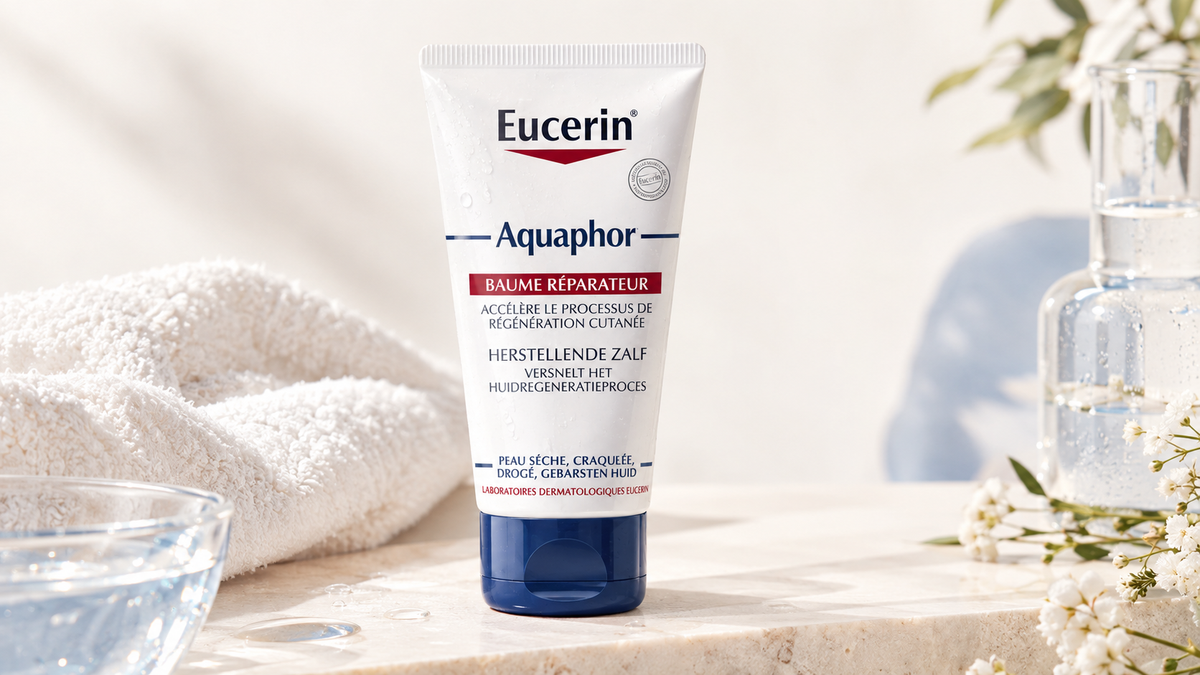
For localized areas of extreme dryness, chapped texture, or post-cleansing friction, rich barrier unguents such as Eucerin Aquaphor Baume Réparateur Skin Repair Balm provide an intensive semi-occlusive layer that prevents hydration from escaping while protecting compromised tissue from atmospheric dry air. Similarly, multi-purpose soothing ointments like Lucas' Papaw Ointment Multipurpose Balm can be tapped across delicate dry patches, such as the vermilion border of the lips or dry contours around the nostrils, creating a reliable barrier over mineral-dampened skin.
When managing persistent localized dryness on vulnerable facial territories like the delicate ocular contour, targeted emollient formulations such as Grahams Face & Eyelid Eczema Cream provide calibrated, gentle lipid nourishment without the heavy weight of traditional waxes. For broader regions experiencing rough patches, flaking, or reactive discomfort, Grahams Natural C+ Cream Eczema & Dermatitis Relief delivers emollient cushioning that supports natural lipid replenishment. Incorporating non-steroidal comfort formulas like Atopiclair Non-Steroidal Cream ensures that dry, fragile barriers receive structural moisture support, sealing in the physiological benefits of French thermal water while buffering reactive skin against daily micro-stressors.
 Eucerin Aquaphor Baume Réparateur Skin Repair Balm 40g$8.4 $15.95
 Grahams Face & Eyelid Eczema Cream 50g$16.95
 Grahams Natural C+ Cream Eczema & Dermatitis Relief 50g$18.0
 Atopiclair Non-Steroidal Cream 100 ml$17.8
 Lucas’ Papaw Ointment Multipurpose Balm 15g$8.85
The microbiome connection: postbiotics of thermal springs
One of the most fascinating frontiers in dermatological science is the role of the cutaneous microbiome and how specific mineral ecosystems help sustain diverse bacterial colonies on human skin. Authentic French thermal springs do not originate in sterile subterranean isolation; they harbor distinct, ancient microflora known as thermal extremophiles. Over centuries in high-pressure, oxygen-poor deep geological pockets, non-pathogenic microorganisms such as Aquaphilus dolomiae and Vitreoscilla filiformis generate metabolic byproducts, often classified as postbiotics.
When thermal water is packaged at the spring, these biologically active lysates and fractions remain stable within the aerosol canister. Scientific evaluations suggest that these postbiotic components interact with the skin surface environment, supporting the appearance of a balanced, comfortable complexion. Rather than disrupting the microbial flora like conventional tap water and aggressive surfactant cleansers, mineral-dense thermal spring water helps support a harmonious surface biome, contributing to skin that looks and feels more resilient against daily environmental stressors.
Practical everyday applications for sensitive complexions
The versatility of thermal spring water extends well beyond a mid-flight indulgence or an aesthetic desk accessory. For skin experiencing acute reactivity, thermal water serves as an indispensable functional step across multiple phases of personal care:
- Post-Cleansing Calming: Hard tap water often leaves residual mineral deposits and disrupts natural cutaneous acidity. A generous spray of thermal water immediately after cleansing neutralizes tap water minerals and rebalances surface pH before active serums are introduced.
- Tempering Exercise and Sun Heat: Physical exertion and heat exposure cause rapid capillary dilation and cutaneous flushed sensation. Thermal mist delivers an immediate cooling sensation via micro-droplet diffusion, calming the subjective perception of heat without subjecting reactive vessels to the shock of ice or cold packs.
- Diluting Potent Actives: When transitioning into targeted treatment steps, misting the complexion lightly beforehand can provide a buffer that aids comfortable spreadability and minimizes potential irritation.
- Setting and Refreshing Powder Formulations: A delicate mist over finished makeup merges powder particles into a luminous, natural skin finish while delivering a burst of trace minerals that prevents midday tightness.
By understanding the biochemical and physiological underpinnings of thermal water, you transform an elemental ritual into an intentional act of barrier preservation. When backed by French pharmacy tradition and paired with well-formulated lipid balms, thermal water ceases to be merely a luxury mist and becomes an indispensable foundation for long-term skin comfort.
Frequently asked questions
Can thermal water replace my daily hydrating toner or serum?
Thermal water provides trace minerals, calcium, and postbiotic benefits, but it does not contain concentrated humectants like glycerin or hyaluronic acid. It works best as a prepping step layered immediately before hydrating serums and barrier creams.
Why does my face feel dry after using a thermal water spray?
Leaving water droplets to evaporate naturally in low ambient humidity causes flash trans-epidermal water loss. To keep skin hydrated, always blot away pooled water after sixty seconds and apply an emollient or barrier cream immediately while the skin remains damp.
Is thermal water safe for compromised, reactive, or post-procedure skin?
Yes. Sourced and packaged under sterile conditions without added preservatives, synthetic fragrances, or alcohol, thermal spring water is naturally compatible with hypersensitive, reactive, and post-procedure epidermal tissue.
How does French thermal water differ from standard filtered tap water?
Filtered tap water is typically stripped of impurities but also lacks beneficial trace minerals, and municipal water often carries drying chlorine. Thermal water emerges from deep geological springs enriched with specific ratios of calcium, magnesium, selenium, silica, and postbiotic lysates that support the skin barrier.