


Article: The Myth of the 'Base Tan': Does Tanning Before a Trip Really Protect Your Skin?

The Myth of the 'Base Tan': Does Tanning Before a Trip Really Protect Your Skin?
Upolife Editorial Team·

The myth of the 'base tan': does tanning before a trip really protect your skin?
With a sunny holiday on the horizon, you may have heard the advice to build up a 'base tan' beforehand — the idea being that arriving at the beach already bronzed will shield you from burning. It sounds plausible. It is, unfortunately, not supported by the evidence. This article looks at what the science actually says, so you can make an informed choice before you pack your bags.
What a tan actually is
A tan is not a sign of health or resilience. According to the CDC, any change in skin color after UV exposure — whether a tan or a burn — is a sign of injury, not health. The Skin Cancer Foundation puts it plainly: tanning is a sign of skin damage, and that damage starts with your very first tan. The American Academy of Dermatology (AAD) describes a tan as your body's response to injury, noting that when you tan, you are intentionally putting your health at risk. None of these positions leave room for the idea that a tan is a protective preparation.
Does a base tan prevent sunburn?
This is one of the most widespread tanning myths. A 2022 AAD survey found that 22% of respondents believed a base tan will prevent sunburns — and 20% believed tanning is safe as long as you do not burn. The Skin Cancer Foundation directly addresses this: tanning does not protect against sunburn; it simply exposes you to more harmful UV rays. In other words, the process of building a base tan involves the same UV damage you are supposedly trying to avoid on your trip, without providing meaningful protection once you get there.
Does a base tan lower skin cancer risk?
The AAD survey found that 18% of respondents believed a base tan decreases the risk of skin cancer, and 13% believed tanning is healthy. The CDC is clear that most skin cancers are caused by too much exposure to ultraviolet rays, and that UV rays can damage skin cells. The AAD notes that both tanning and sunburning damage your skin, and that the more you tan and sunburn, the more this damage builds up over time. A base tan does not reset that accumulation — it adds to it.
What actually protects your skin
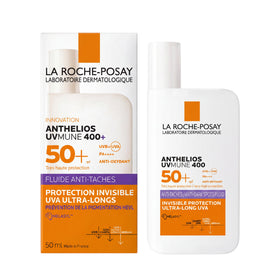
The good news is that well-evidenced sun protection strategies exist. The CDC recommends staying in the shade, wearing clothing that covers your arms and legs, wearing a wide-brimmed hat to shade your face, head, ears, and neck, and using wrap-around sunglasses that block both UVA and UVB rays. For sunscreen, the CDC recommends a broad-spectrum product with an SPF of 15 or higher. The Skin Cancer Foundation similarly recommends seeking shade, wearing protective clothing, and applying sunscreen every day. These approaches address UV exposure directly, rather than attempting to build tolerance through prior damage.
If you want a sun-kissed look without the risk
The AAD specifically notes that self-tanning products are a way to achieve a tan appearance without UV exposure, and recommends continuing to use sunscreen alongside them. Self-tanners and bronzers are cosmetic products that colour the skin's surface; they do not provide sun protection on their own, which is why pairing them with sunscreen remains important.
One more thing worth knowing
The AAD survey also found that 24% of respondents did not know you can get sunburned on a cloudy day. UV rays penetrate cloud cover, so sun protection is relevant even when the sky is overcast — a useful reminder for travel days that do not look obviously sunny.
Frequently asked questions
Does a base tan give any meaningful sun protection?
No. The Skin Cancer Foundation states directly that tanning does not protect against sunburn; it simply exposes you to more harmful UV rays. The CDC confirms that any skin color change from UV exposure is a sign of injury, not protection.
Is it true that tanning is safe as long as you don't burn?
This is a myth. The AAD's 2022 survey identified this as one of several common misconceptions. Both tanning and sunburning damage your skin, according to the AAD, and that damage accumulates over time regardless of whether a burn occurs.
Does a base tan reduce skin cancer risk?
No. The CDC states that most skin cancers are caused by too much UV exposure, and that UV rays damage skin cells. Building a base tan adds to cumulative UV damage rather than offsetting it.
Can I get sunburned on a cloudy day?
Yes. The AAD notes that 24% of survey respondents were unaware of this. UV rays are present even on overcast days, so sun protection measures remain relevant regardless of cloud cover.
What is the safest way to get a tanned appearance?
The AAD recommends self-tanning products as an alternative to UV tanning, while continuing to use sunscreen alongside them. Self-tanners provide a cosmetic colour change only and do not offer sun protection on their own.
What sun protection measures are actually supported by evidence?
The CDC recommends seeking shade, wearing clothing that covers arms and legs, wearing a wide-brimmed hat, using wrap-around sunglasses that block UVA and UVB rays, and applying a broad-spectrum sunscreen with SPF 15 or higher. The Skin Cancer Foundation supports the same approach.
This article is for general information only and does not constitute medical advice. If you have concerns about your skin or sun exposure history, please consult a qualified healthcare professional. — Upolife Editorial, 2026. Sources: American Academy of Dermatology, 'New survey reveals public confusion about risks of tanning and sunburns' (May 24, 2022), https://www.aad.org/news/new-survey-reveals-public-confusion-about-risks-of-tanning-and-sunburns; CDC, 'Reducing Risk for Skin Cancer' (last reviewed June 17, 2026), https://www.cdc.gov/skin-cancer/prevention/index.html; The Skin Cancer Foundation, 'Tanning' (updated September 2026), https://www.skincancer.org/risk-factors/tanning/.
Sources
- New survey reveals public confusion about risks of tanning and sunburns (American Academy of Dermatology, May 24, 2022)
- Reducing Risk for Skin Cancer (CDC, last reviewed June 17, 2026)
- Tanning (The Skin Cancer Foundation, updated September 2026)
For general information only; not medical advice. Follow the manufacturer’s directions and warnings for the exact product.

