Article: The Myth of 'Anti-Aging' Creams: What They Can (and Can't) Do for Your Skin
The Myth of 'Anti-Aging' Creams: What They Can (and Can't) Do for Your Skin

The seduction of the miracle jar
Walk into any beauty department or browse a modern skincare aisle, and the vocabulary remains remarkably theatrical. Jars promise to reverse time, erase deep creases, reset cellular biological clocks, and lift sagging jawlines within fourteen days. The cosmetics industry has spent half a century cultivating the belief that aging is an error of neglected skincare—a flaw that can be polished away if only you discover the correct emulsion at the correct price point. It is an enticing fantasy, particularly because nobody wants to feel powerless against the passage of time.
If you have ever purchased an expensive jar of cream with high hopes only to discover your laugh lines firmly in place six months later, you have not failed your skin. Rather, the marketing machinery failed to tell you the unvarnished scientific truth about human dermatological biology. Creams, serums, and balms play a vital, clinically verified role in supporting skin barrier health, texture, and resilience. However, they exist within strict physical boundaries governed by human anatomy and chemistry. Understanding what topicals can legitimately achieve—and where their power abruptly stops—is the ultimate antidote to skincare disillusionment.
How skin actually ages over time
To understand what a cream cannot do, we have to look past the mirror and examine the multi-layered architecture of the human face. Skin aging is not a surface scratch; it is a profound, progressive structural shift spanning two distinct pathways: intrinsic aging and extrinsic aging. Intrinsic aging is genetically programmed and chronologically driven. Beginning roughly in our mid-twenties, fibroblasts—the specialized dermal cells responsible for manufacturing collagen and elastin—gradually decelerate. Natural collagen production declines by roughly one percent per year. At the same time, natural hyaluronic acid reserves in the dermis deplete, the cellular renewal cadence slows down, and the microvascular network supplying nutrients to the upper layers becomes less robust.
Extrinsic aging, on the other hand, is driven almost entirely by external environmental aggression, with ultraviolet radiation from the sun representing up to eighty percent of visible premature skin changes. Chronic UV exposure triggers matrix metalloproteinases, enzymes that aggressively sever and degrade structural collagen fibrils in the dermis. This phenomenon, known as solar elastosis, leaves behind tangled, disorganized clumps of broken elastic tissue that rob the skin of its structural rebound. Added to this are the consequences of ambient pollution, lifestyle factors, and repetitive mechanical muscle contractions from smiling, squinting, and furrowing.
Crucially, the most dramatic markers of facial aging—the descent of the lower cheek, the deepening of the nasolabial folds, and the hollowing beneath the lower eyelids—do not originate in the skin at all. They stem from the gradual atrophy and downward migration of subcutaneous fat pads, combined with the microscopic resorption of underlying facial bone. No topical formulation applied to the epidermis can replenish deep malar fat pads or remodel facial bone structure. Expecting a cosmetic moisturizer to lift fallen tissue is asking chemistry to do the work of physics and structural surgery.
What topical skincare can genuinely accomplish
Dismissing the wilder claims of anti-aging marketing does not mean skincare is useless. On the contrary, topical formulas perform remarkable, demonstrable cosmetic and biological work when measured against realistic scientific benchmarks. The most immediate and dramatic transformation a cream can deliver is the restoration of stratum corneum hydration. When the outermost layer of the skin is depleted of moisture, corneocytes shrink, creating microscopic fissures and uneven light reflection. This dehydration makes fine lines appear significantly deeper, rougher, and more pronounced than they actually are.
When you apply humectants and targeted plumping treatments, such as NIVEA Q10 Anti-Wrinkle Power Expert Targeted Wrinkle Filler Serum 15ml, you are delivering intensive local moisture that rapidly saturates dried surface cells. The humectants draw moisture into the upper epidermis, causing dehydrated cells to swell. This produces a genuine, visible optical plumping effect that softens the appearance of surface lines within minutes. While this hydration does not reconstruct deep dermal collagen networks, it creates real cosmetic smoothing, improves the feel of elasticity, and temporarily diminishes surface crepiness.
Beyond instant surface hydration, topical creams are indispensable for reinforcing the skin's lipid barrier. A healthy barrier functions like mortar between cellular bricks, composed of ceramides, cholesterol, and essential fatty acids. Environmental stressors, harsh cleansing, and chronological aging naturally deplete these protective lipids, contributing to a feeling of tightness, dryness, and sensitivity over time. When the barrier is compromised and low-grade irritation persists, the skin's overall comfort and surface quality can suffer noticeably.
By applying restorative barrier preparations, you help the skin surface feel more comfortable and protected. Intensive reparative formulations like La Roche-Posay Cicaplast Baume B5+ Ultra-Repairing Soothing Balm 100ml and Uriage Bariéderm-CICA Cream with Copper-Zinc 40ml – Repairs & Soothes deliver essential trace minerals and barrier-stabilizing agents that help insulate and soothe the skin surface. These formulations calm the feeling of irritation, support recovery after environmental weather exposure, and leave the skin feeling resilient. A deeply hydrated, comfortable skin surface always appears plumper, smoother, and healthier than a parched, irritated complexion.

Antioxidants and the reality of prevention
Where topical formulas excel in scientific reality is prevention rather than reverse transformation. While topicals cannot magically splice together severed elastin fibrils in the deep dermis, they can intercept environmental oxidants before those molecules inflict fresh cellular damage. Environmental stress produces unstable free radicals—molecules missing an electron that relentlessly steal electrons from healthy lipid membranes, cell proteins, and DNA structures.
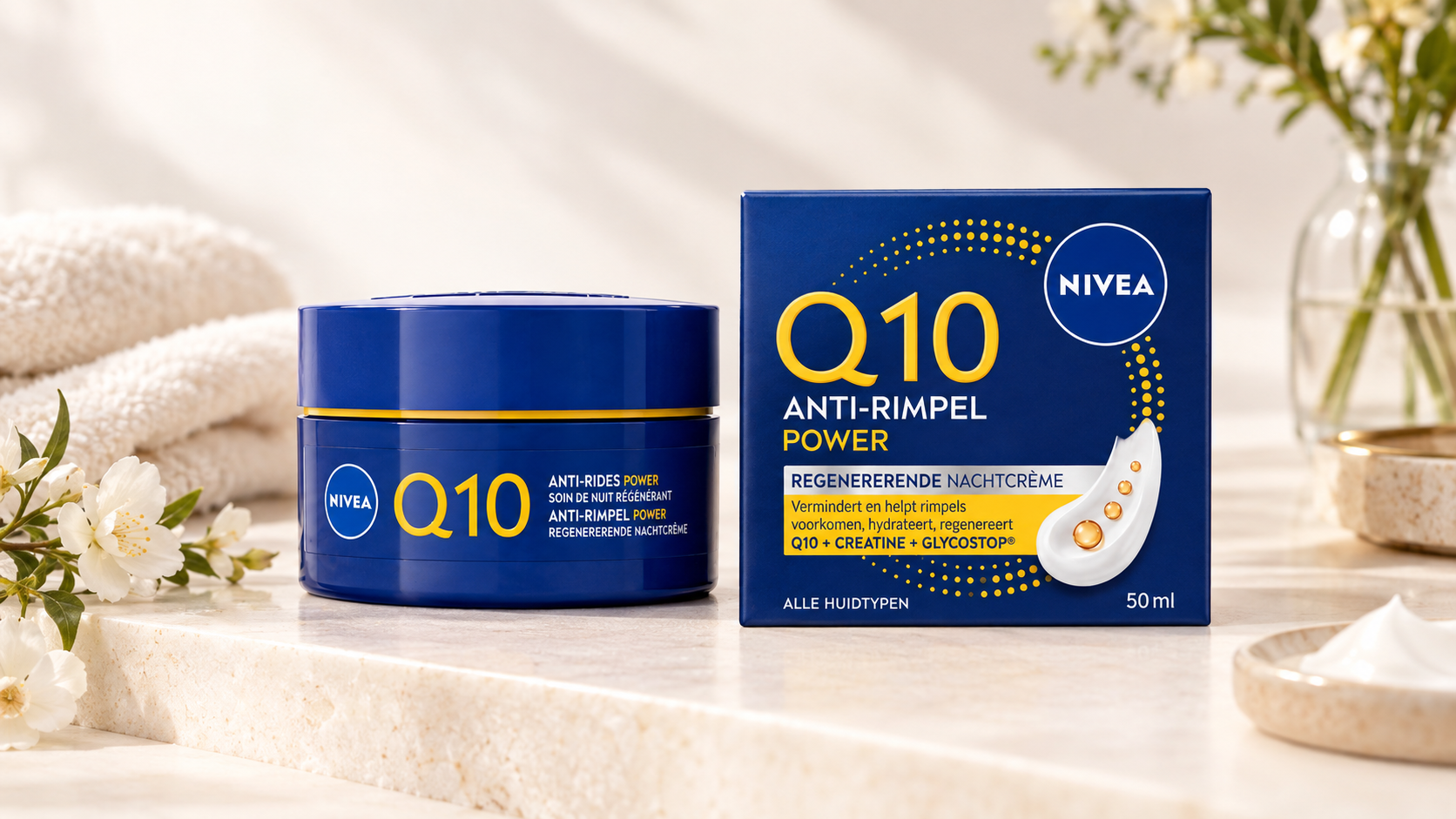
Topical antioxidants act as sacrificial shields, donating their own electrons to neutralize free radicals before they can attack living cells. Coenzyme Q10 (ubiquinone) is one of the skin's endogenous lipid-phase antioxidants, naturally concentrated in cell membranes to support cellular energy production and protect against lipid peroxidation. Because natural ubiquinone levels in human skin decline with age and UV exposure, incorporating this antioxidant topically via products like NIVEA Q10 Power Anti-Wrinkle Regenerating Night Cream 50ml is a popular way to support the skin's overnight comfort and surface appearance.
Topical antioxidants cannot erase a crease that formed twenty years ago, but their sustained, daily presence dramatically limits the rate at which existing structures degrade. Think of preventive topical care not as an eraser of your past, but as insurance for your future. Paired with daily broad-spectrum sun protection, topical antioxidants represent the absolute pinnacle of genuine scientific anti-aging care.
 NIVEA Q10 Power Anti-Wrinkle Regenerating Night Cream 50ml$17.45 $24.0
 NIVEA Q10 Anti-Wrinkle Power Expert Targeted Wrinkle Filler Serum 15ml$18.8 $24.0
 Uriage Bariéderm-CICA Cream with Copper-Zinc 40ml – Repairs & Soothes$11.9 $19.0
 Eucerin Aquaphor Baume Réparateur Skin Repair Balm 40g$8.4 $15.95
 La Roche-Posay Cicaplast Baume B5+ Ultra-Repairing Soothing Balm 100ml$23.0
What no cosmetic cream will ever fix
To cultivate a peaceful relationship with your skincare routine, it is essential to draw a clear line between the biological capabilities of a cosmetic jar and the structural realities that belong solely to aesthetic medicine or natural anatomy. Here is what no over-the-counter topical cream can genuinely deliver:
- Lifting sagging facial structures: Ptosis, or gravitational sagging along the jawline and neck, results from loosening connective tissue ligaments, muscular laxity, and descending fat compartments. A topical cream works on the upper fractions of a millimeter of the skin surface; it cannot tighten deep anatomical retaining ligaments.
- Eliminating dynamic expression lines: Creases like crow's feet and glabella lines (the eleven lines between the eyebrows) are created by decades of direct muscular contraction against the skin. Creams do not paralyze or soften muscle movement.
- Restoring lost structural volume: Topical moisturizers cannot replace lost cheek fat pads or rebuild alveolar and maxillary bone structure.
- Completely erasing deep, etched elastotic wrinkles: Severe solar elastosis involves profound dermal degradation. Topicals can polish the stratum corneum texture and hydrate the edges of wrinkles, but they cannot replace deeply scarred dermal tissue.
Recognizing these limitations is not pessimistic; it is deeply liberating. When you stop demanding that your night moisturizer perform the equivalent of an in-office aesthetic intervention, you stop cycling through expensive disappointments. You begin treating your skincare for what it truly is: sensory self-care and functional barrier hygiene that preserves the health and vitality of your body's largest protective organ.
The European pharmacy philosophy of longevity
In French and wider European pharmacy culture, the rhetoric around aging is strikingly different from the dramatic promises frequently seen in American marketing. The traditional French parapharmacie does not treat aging as an emergency to be corrected. The focus is almost exclusively on skin competence: maintaining a supple moisture barrier, supporting skin comfort, and protecting against environmental degradation.
European dermatological ranges celebrate simple, highly effective occlusives and soothing balms over frantic multi-step routines laden with conflicting active ingredients. Formulas like Eucerin Aquaphor Baume Réparateur Skin Repair Balm 40g represent this ethos perfectly. By creating a comfortable, breathable layer over the skin surface, occlusives help the skin feel protected and at ease, allowing its surface to settle and look its best. When skin is shielded from dry climate extremes and physical friction, its surface texture settles into a calm, radiant state that cosmetic glitter or aggressive exfoliants can never replicate.
A disciplined European-style routine focuses on four foundational pillars: gentle non-stripping cleansing, rigorous daily broad-spectrum sun defense, targeted antioxidant support, and barrier-replenishing hydration. When you strip away the sensational claims of instant transformation, this measured consistency is what actually keeps skin looking radiant, supple, and healthy across every decade of life.
Frequently asked questions
Do anti-aging creams really work?
They work within specific physical parameters: hydrating the outer stratum corneum to plump superficial fine lines, fortifying the lipid barrier, and defending against environmental oxidative damage. They cannot permanently erase deep structural creases, lift sagging ligaments, or restore lost facial fat pads.
Why does my skin look immediately smoother after applying a moisturizer?
Moisturizers deliver humectants and emollients that swell dehydrated surface corneocytes and fill microscopic roughness between cells. This creates immediate optical light scattering and surface plumping, making lines appear softer even though underlying dermal structures have not changed.
Can an over-the-counter cream replace professional aesthetic procedures?
No. Creams operate primarily on the epidermis and upper dermal barrier. They cannot duplicate the volumetric restoration of dermal fillers, the muscle-relaxing effects of neuromodulators, or the dramatic tissue remodeling achieved by surgical procedures.
What is the single most effective topical product for slowing skin aging?
Daily broad-spectrum sunscreen. Because up to eighty percent of visible facial aging is driven by chronic ultraviolet radiation, shielding skin from daily photo-damage prevents collagen breakdown far more effectively than any restorative cream can repair it.
At what age should you start an aging-support routine?
Preventive skin support can begin in your early twenties. The foundation requires nothing complicated: a gentle cleanser, daily broad-spectrum sun protection, and a barrier-supportive moisturizer with basic antioxidants.