What an Expert Would Actually Pick for Gentle Daily Eye Makeup Removal

Rethinking the periocular cleanse
When I assess a skincare routine that feels meticulous everywhere else, the periocular zone is almost always where things quietly unravel. We invest in barrier serums and lipid-dense creams for our cheeks and forehead, yet we approach the skin around the eyes with aggressive scrubbing pads, stinging biphasic solvents, or fragranced formulas that leave the surface tight, red, and depleted. If you wear mascara, long-wearing eyeliner, or mineral concealers daily, the act of taking them off should not be an endurance test for your skin barrier.
The eyelid and undereye area represent the thinnest cutaneous tissue on the human body, measuring roughly a third of the thickness of facial skin elsewhere. With minimal subcutaneous adipose tissue, a naturally sparse distribution of sebaceous glands, and immediate proximity to the delicate conjunctiva, this zone simply cannot tolerate the high-surfactant loads or relentless mechanical drag typical of conventional makeup removers. When clients ask me what I would actually pick for daily periocular cleansing, my answer bypasses conventional beauty aisles entirely in favor of specialized European ophthalmic care.
The vulnerability of delicate eyelid skin
Understanding why standard makeup removal often backfires requires looking closely at eyelid physiology. Because the periocular surface produces so little natural sebum, its moisture barrier relies on an exceptionally fragile stratum corneum. Every time you drag a textured cotton pad across your upper lid, you generate shear stress that can place unnecessary strain on fine elastin fibers, disturb the lipid matrix, and leave the delicate lash follicles looking and feeling irritated.
Compounding this physical stress is the risk of ingredient migration. Surfactants, volatile silicones, and synthetic perfumes designed to dissolve waterproof film-formers frequently migrate across the lid margin and onto the ocular surface itself. This can interfere with the comfort of the eye area and the natural balance maintained by the meibomian glands along the rim of the eyelids. The result is not just surface dryness or flaking skin, but tired, uncomfortable eyes by evening. A truly sophisticated eye makeup remover must therefore respect both cutaneous and ocular comfort simultaneously.
Why sterile formulation changes everything
In traditional French pharmacy practice, the gold standard for periocular hygiene has long been defined by ophthalmology rather than decorative cosmetics. In ophthalmic medicine, formulas intended for the eyelids are held to an entirely different standard of purity, biocompatibility, and tolerance. The primary breakthrough in this discipline is the elimination of traditional preservatives, which remain among the most frequent culprits behind stinging, redness, and eyelid discomfort.
Maintaining a formula completely preservative-free while keeping it stable and hygienic for daily use requires specialized, airless, calibrated packaging technology. This sterile design protects the gel from microbial contamination throughout its lifespan without requiring parabens, phenoxyethanol, or other antimicrobial stabilizing agents that can aggravate sensitive eyes. When you apply a genuinely sterile gel to the eyelid margin, you remove the environmental and synthetic triggers that so often keep the periocular area in a state of low-grade, persistent reactivity.
The cleansing gel designed for eyelids
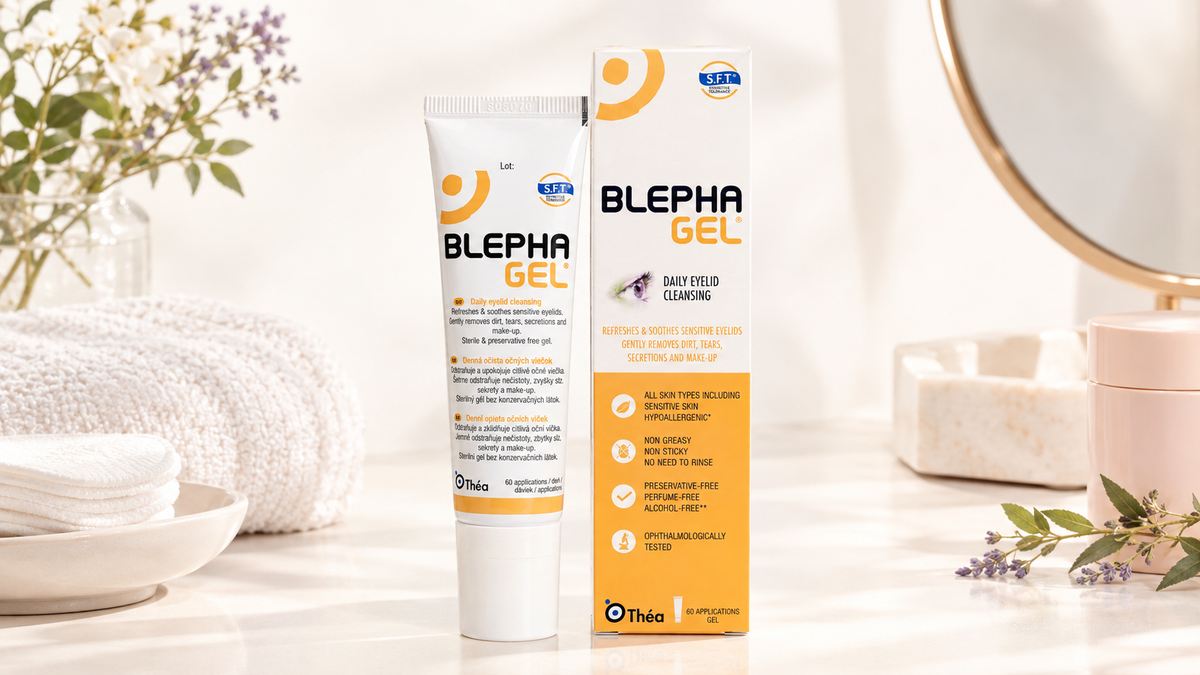
The pick I would personally make for anyone navigating sensitive eyes, contact lens wear, or daily eye makeup removal is Blephagel Daily Eyelid Cleansing Gel – Sterile & Preservative-Free – 30g. Formulated specifically as an isotonic, hypoallergenic gel for the gentle hygiene of sensitive eyelids and lash lines, this formula works by dissolving residues without requiring friction, soapy foam, or vigorous rinsing.
What sets Blephagel Daily Eyelid Cleansing Gel – Sterile & Preservative-Free – 30g apart from conventional micellar waters or oil-based removers is its distinct, non-greasy gel matrix. Rather than emulsifying with harsh surfactants that strip the stratum corneum, the gel works through gentle mechanical cohesion, lifting pigment, sebum, and environmental debris away from the lash line while respecting the natural pH of tears. Because it is completely sterile, perfume-free, and preservative-free, it avoids leaving an oily residue that clouds your vision or interferes with delicate meibomian gland openings.
 Blephagel Daily Eyelid Cleansing Gel – Sterile & Preservative-Free – 30g$14.0 $21.0
 Grahams Face & Eyelid Eczema Cream 50g$16.95
Calming reactive eyelids after cleansing
Cleansing is only the initial phase of periocular care; barrier restoration is what sustains comfort over time. For individuals whose lids are already compromised—whether from years of aggressive rubbing, environmental allergens, or seasonal dryness—even the gentlest makeup removal needs to be followed by targeted, non-irritating moisture that calms visible redness and restores suppleness without migrating into the eyes.
When the periocular barrier presents with flaking, roughness, or noticeable irritation, my companion recommendation is Grahams Face & Eyelid Eczema Cream 50g. Specifically developed for sensitive, flare-prone facial areas including the eyelids, this targeted cream delivers soothing hydration and barrier support directly to stressed skin. Its texture strikes a careful balance: rich enough to cushion and support lipid-depleted skin cells, yet light and compliant enough to spread across the eyelid without tugging or creating a heavy, suffocating layer.
Using Grahams Face & Eyelid Eczema Cream 50g following sterile gel cleansing helps soothe the tight, uncomfortable sensation that often lingers after long days under artificial light or heavy makeup. By reinforcing the skin's natural lipid defense, it builds resilience against the day-to-day wear of cosmetics, ensuring that subsequent cleansing sessions take place on healthy, intact skin rather than an already reactive canvas.
How to dissolve pigment without tugging
Even the most pristine formula can cause irritation if applied with poor mechanical technique. The primary mistake people make when removing eye makeup is applying direct, back-and-forth rubbing motions across the eyelid. Pigments in mascara, shadow, and liner are formulated with polymers and waxes designed to adhere to keratin; breaking those bonds requires time and solvent action, not raw friction.
To cleanse properly, you want to allow the gel to soften and envelop the makeup before moving it. Applying a calibrated amount of sterile gel to a soft pad or a clean fingertip, pressing it gently against the closed lid, and holding it in place for several seconds allows the product to disperse the cosmetics naturally. Only then should you sweep gently downward along the natural direction of the lashes, letting the formula carry the residue away without pulling on the delicate skin folds.
-
1. Dispense onto a clean pad
Place a small, calibrated pea-sized drop of sterile cleansing gel onto a lint-free cotton pad or clean fingertip.
-
2. Press and dissolve without rubbing
Close your eyes and gently press the product against the lid and lash line for five to ten seconds to soften pigment.
-
3. Sweep downward along the lashes
Gently glide the pad downward from the brow bone toward the lash tips, avoiding any back-and-forth scrubbing motions.
-
4. Clear the eyelid margin softly
Using a fresh edge of the pad, carefully cleanse along the base of the lashes to remove remaining debris without entering the eye.
-
5. Seal moisture into periocular skin
Lightly tap a barrier-supportive cream onto the orbital bone and outer eye contours using your ring finger to soothe the skin.
Ingredients to bypass near the eyes
When evaluating products for the periocular zone, what is excluded from the formula is just as critical as what is included. Conventional makeup removers frequently rely on ingredients that may be acceptable on resilient body skin but are completely unsuited for the eyelid margin. If you want to support your skin barrier and ocular comfort, there are several key formulation categories worth avoiding entirely.
- Synthetic fragrance and masking scents: Fragrance compounds are among the most common triggers for discomfort and redness around the eyes, often manifesting as itchy, red, or crepey eyelids.
- High concentrations of denatured alcohol: Often included in quick-dry eye formulas, volatile alcohols flash off the skin quickly, stripping critical surface lipids and leaving the stratum corneum parched.
- Heavy mineral oils and heavy waxes: While occlusive, thick unrefined oils can sit heavily on the lid margin, occasionally migrating into the eyes, causing transient blurriness, or accumulating around the meibomian glands.
- Harsh ionic surfactants: Foaming agents like sodium lauryl sulfate disrupt the intercellular lipid bilayers, accelerating transepidermal water loss and leaving eyelids sensitized.
By selecting products that consciously avoid these common irritants, you can support a more comfortable, balanced experience for delicate periocular skin. In French pharmacy formulations, simplicity and purity are prioritized over sensory perfumes or unnecessary cosmetic fillers, creating an environment where delicate skin can consistently thrive.
Frequently asked questions
Can I use regular facial cleanser to remove my eye makeup?
Most facial cleansers contain foaming surfactants and active ingredients calibrated for thicker facial skin, which can easily strip the delicate eyelid barrier and sting the ocular surface. A dedicated, sterile periocular product provides the biocompatibility and gentleness necessary for safe daily cleansing.
How does a sterile gel differ from micellar water?
While micellar water uses dispersed surfactant clusters suspended in preserved water, a sterile gel like Blephagel Daily Eyelid Cleansing Gel – Sterile & Preservative-Free – 30g is specifically formulated without preservatives or perfumes to match tear biocompatibility, offering a cushiony texture that minimizes mechanical friction.
Is it necessary to rinse after using a dedicated eyelid cleansing gel?
Sterile eyelid cleansing gels are typically formulated to be non-greasy, non-sticky, and non-irritating, meaning they can be gently wiped away with a pad without requiring vigorous water rinsing that might dry out sensitive skin.
When should I apply eyelid cream in relation to makeup removal?
Apply your soothing eyelid cream immediately after your periocular cleanse on clean, slightly damp skin, using light tapping motions along the orbital bone to replenish lipids and lock in hydration overnight.
The philosophy of minimal periocular friction
The French pharmacy approach to beauty has always centered on restraint, physiological respect, and the long-term preservation of the skin barrier. Nowhere is this ethos more necessary than around the eyes. The goal of removing eye makeup should never be a squeaky-clean feeling achieved through friction, but rather a calm, balanced surface where cosmetics and impurities are cleared without disrupting the underlying biology.
By shifting your evening ritual toward sterile ophthalmic gels like Blephagel Daily Eyelid Cleansing Gel – Sterile & Preservative-Free – 30g and supporting compromised skin with targeted care like Grahams Face & Eyelid Eczema Cream 50g, you eliminate the daily cycle of irritation, puffiness, and dryness. It is an intentional, expert-led approach that preserves the delicate architecture of your eyelids and proves that true gentleness is the most effective form of care.