Article: The Skincare Mistake: Over-Exfoliating Your Skin
The Skincare Mistake: Over-Exfoliating Your Skin

The subtle pull of over-exfoliation
There is an undeniable satisfaction that follows a deep, purifying scrub or an active acid treatment. Your complexion immediately emerges remarkably soft, reflective, and remarkably clear, as if every imperfection has vanished under the sink basin. Because the visual reward feels so prompt and undeniable, it becomes remarkably easy to fall into the habit of reaching for your chemical liquids, peeling pads, or smoothing grains every single day. Before long, that ritual ceases to feel like an occasional treatment and transforms into an everyday standard of cleanliness.
Yet the line between intentional skin refinement and silent depletion is remarkably slender. Skin is not a passive canvas waiting to be endlessly resurfaced; it is a dynamic living shield that thrives on stability and balance. When enthusiasm outpaces your skin's physiological capacity to replenish its protective outer strata, the very clarity you set out to achieve begins to reverse itself. Experiencing this misstep does not mean your routine is broken or that you have failed your skin. Rather, it simply signals an opportunity to pause, adjust your cadence, and discover an approach rooted in lasting comfort.
Recognizing the signs of over-exfoliation
The earliest indicators of excessive exfoliation are rarely dramatic; instead, they whisper quietly through everyday sensations. You might notice an unusual tightness straight out of the shower, or observe that your trusty daily moisturizer suddenly produces a transient warm prickle across your cheeks. These sensations are subtle signals from the outermost layer of your epidermis, the stratum corneum, letting you know that its lipid cement is being stripped away faster than your sebaceous glands and epidermal cells can synthesize replacements.
As this barrier stress progresses, the visual presentation shifts. The skin often takes on an artificial, glass-like shine that can easily be mistaken for a healthy glow, yet feels dry, parched, and stiff beneath the surface. You may experience paradoxical flaking across your nose or forehead alongside sudden reactive breakouts, as the compromised protective mantle allows foreign particulates and everyday impurities to settle in unimpeded. Understanding that these blemishes stem from vulnerability rather than excess congestion is the essential first step toward meaningful recovery.
Understanding your skin's natural turnover cycle
Beneath the visible surface, your skin operates on a sophisticated biological schedule known as desquamation. In healthy adult skin, nascent keratinocytes form in the basal layer of the epidermis, gradually migrating upward while maturing and manufacturing natural moisturizing factors, ceramides, and fatty acids. Over the course of roughly twenty-eight days, these cells complete their upward journey, flatten into protective corneocytes, and quietly detach from the surface without requiring vigorous intervention.
When exfoliants are applied with excessive frequency, this natural progression is prematurely truncated. Immature cells are pulled to the surface before they have fully fortified their cellular membranes or synthesized sufficient moisture-binding humectants. The result is a fragile, hyper-reactive surface that struggles to retain hydration, leaving your complexion susceptible to transepidermal water loss and ambient environmental stressors. Exfoliation functions best when it politely cooperates with this biological rhythm rather than attempting to forcibly accelerate it.
How often to exfoliate face
Determining how often to exfoliate face depends largely on your inherent skin temperament, local climate, and the specific mechanism of exfoliation you select. French pharmacy skincare philosophy has long championed moderation over aggression, viewing exfoliation as an occasional polishing ritual rather than a rigorous daily chore. For most complexions, limiting targeted exfoliating treatments to once or twice weekly provides all the clarity benefits you desire while leaving the protective moisture barrier completely undisturbed.
For oily or blemish-prone complexions that naturally experience slower desquamation and higher sebum density, a gentle exfoliant used two to three times per week can effectively clear pore linings and prevent blockages. Combination skin generally benefits from an intuitive, localized approach: applying exfoliating formulas once or twice a week solely across the central T-zone while treating delicate cheek contours with soothing hydration. Dry or naturally delicate skin types, meanwhile, rarely need exfoliation more than once every ten to fourteen days, thriving best when the skin barrier remains utterly peaceful.
Physical versus chemical exfoliation methods
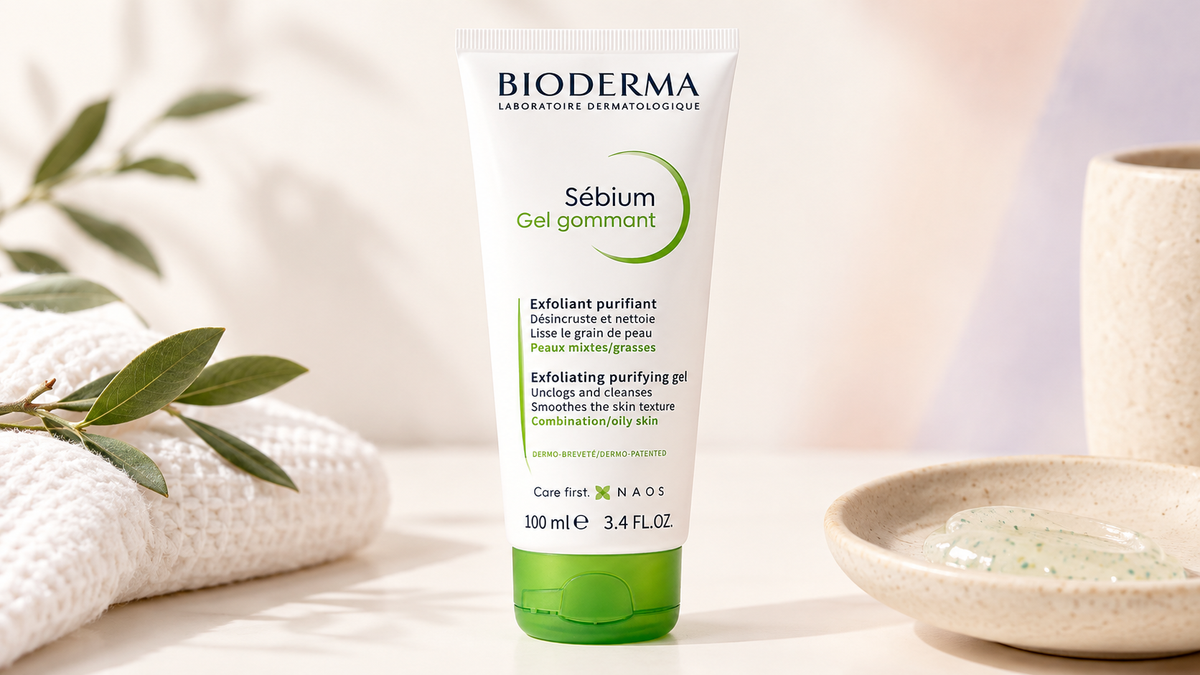
Understanding the tools in your cabinet is fundamental to calibrating your frequency. Physical exfoliants utilize gentle micro-beads or soft polishing grains to mechanically dislodge loosened dead cells from the skin surface. When thoughtfully designed with smooth, rounded spheres, physical formulas offer an immediate textural refinement. A classic example is Bioderma Sébium Exfoliating Purifying Gel 100ml – Unclogs & Smooths Oily/Combination Skin EXP:08/26, formulated specifically to clear pores and smooth combination or oily profiles without aggressive friction.
Chemical exfoliants, by contrast, utilize keratolytic agents such as alpha-hydroxy acids, beta-hydroxy acids, or gentle esters to loosen the intercellular bonds that hold expired corneocytes together. These ingredients dissolve debris within the pores and promote surface clarity over time. For blemish-prone complexions seeking progressive smoothing alongside daily skin comfort, Bioderma Sébium Kerato+ Anti-Blemish High Tolerance Gel-Cream 30ml offers an elegant leave-on balance, delivering targeted keratolytic action within a high-tolerance base designed to respect delicate epidermal limits.
 Bioderma Sébium Exfoliating Purifying Gel 100ml – Unclogs & Smooths Oily/Combination Skin EXP:08/26$11.2 $21.0
 Bioderma Sébium Kerato+ Anti-Blemish High Tolerance Gel-Cream 30ml$18.0 $21.0
How to reset a compromised moisture barrier
If you recognize that your skin is currently over-exfoliated, the remedy begins with an intentional, compassionate reset. Set aside all active peeling solutions, exfoliating washes, clarifying pads, and textured face cloths. Your complexion does not need to be punished or scrubbed clean; it requires rest, moisture preservation, and lipid reinforcement to mend the microscopic fractures within its outermost shield. Stepping back allows the skin's innate repair mechanisms to re-establish cellular homeostasis.
During this restorative window, your routine should center exclusively around three fundamental pillars: a non-foaming or gentle micellar cleanser, an emollient-rich barrier moisturizer loaded with soothing humectants and skin-identical lipids, and broad-spectrum daily sunscreen. Because over-exfoliated tissue is exceptionally sensitive to ultraviolet radiation, diligent mineral or high-protection chemical sun filters are a valued part of any calming routine, helping your complexion look and feel its best while your barrier finds its balance.
-
1. Pause all active exfoliants
Immediately discontinue physical scrubs, chemical acids, clarifying toners, and cleansing brushes for a minimum of two to three weeks to allow barrier recovery.
-
2. Cleanse with utmost gentleness
Wash your face using lukewarm water and a mild, lipid-preserving cleanser that leaves skin feeling soft rather than squeaky clean.
-
3. Replenish moisture and lipids
Apply a soothing, fragrance-free moisturizer rich in humectants and ceramides to damp skin both morning and evening to prevent transepidermal water loss.
-
4. Protect daily with broad-spectrum sunscreen
Finish every morning routine with a generous layer of high-protection broad-spectrum sunscreen, shielding healing skin cells from UV exposure.
-
5. Reintroduce exfoliation gradually
Once your skin feels calm, resilient, and free of tightness, reintroduce an exfoliant just once weekly, closely monitoring tolerance before increasing frequency.
Rebuilding a balanced exfoliating ritual
Once your skin returns to a calm, resilient baseline, exfoliation can be thoughtfully reintroduced as a supportive accent rather than a relentless regimen. The secret to enduring skin health lies in constant dialogue with your complexion. On days when your skin feels wind-whipped, dry, or stressed by travel, it is best to skip your scheduled exfoliation entirely in favor of an extra layer of protective cream. Flexibility will always serve your skin far better than rigid routine adherence.
When you do choose to exfoliate, select formulas that balance efficacy with profound skin tolerance. Utilizing a rinse-off purifying option like Bioderma Sébium Exfoliating Purifying Gel 100ml – Unclogs & Smooths Oily/Combination Skin EXP:08/26 once weekly offers refreshing clarity for congested areas. Alternatively, incorporating a carefully dosed leave-on fluid such as Bioderma Sébium Kerato+ Anti-Blemish High Tolerance Gel-Cream 30ml allows blemish-prone skin to maintain smooth radiance without compromising moisture retention. By treating exfoliation as an occasional polishing polish, your skin barrier stays strong, vibrant, and effortlessly radiant.
Frequently asked questions
How can I tell if my skin is over-exfoliated?
Over-exfoliated skin typically feels uncomfortably tight, stings when basic hydrating creams are applied, and exhibits an unnatural, taut shine accompanied by redness or dry flaking.
How often should oily skin be exfoliated?
Oily or congested skin generally tolerates exfoliation two to three times per week, which sufficiently clears pore buildup without triggering reactive barrier stress.
How long does it take for an over-exfoliated barrier to heal?
Most moisture barriers begin to recover within two to four weeks of pausing all active exfoliants and maintaining a gentle routine focused on lipids, hydration, and sun protection.
Can I exfoliate in the morning or is evening better?
Evening is generally ideal for exfoliation because it permits your barrier to repair overnight without immediate exposure to daytime pollutants, makeup, and ultraviolet light.