The Skincare Mistake: Skipping Your Neck and Décolletage

The quiet boundary at the jawline
Most daily skincare rituals stop abruptly at the chin. We pat serums into our foreheads, trace eye creams along orbital bones with delicate ring fingers, and massage rich lipid barrier balms over our cheeks, treating the lower edge of the jaw as an impermeable perimeter. Below that line lies several square inches of skin that receives almost identical daily environmental exposure, yet we routinely deny it the same consideration. If this sounds familiar, take a deep breath. You are in vast company, and this common omission is one of the easiest routine imbalances to correct.
The neck and chest are not merely an afterthought to facial anatomy; they represent an aesthetic and physiological extension of your complexion. Culturally, French pharmacy traditions have long rejected the strict distinction between face and upper body. European formulations frequently blur the line between facial treatments and body milks precisely because the upper bustline, throat, and collarbones demand continuous barrier care. Reframing your daily facial routine as a gesture that extends from the hairline directly down to the breastbone changes how your skin feels and weathers the seasons.
The fragile biology beneath your collarbones
To understand why skipping your neck and décolletage causes noticeable dehydration, uneven tone, and loss of bounce, it helps to examine the underlying biology. The skin on the neck and chest is markedly thinner than the skin covering the cheeks and forehead. It contains significantly fewer sebaceous glands, which means it produces a much smaller natural lipid film to retain moisture and defend against trans-epidermal water loss. Without a steady internal supply of natural sebum, this tissue struggles to keep itself supple, especially in dry winter air or air-conditioned rooms.
Furthermore, the structural architecture of the neck relies on the platysma muscle, a sheet of superficial muscle that is not firmly anchored to skeletal bone in the same manner as facial musculature. As skin elasticity fluctuates over time, this thin dermal tissue experiences constant mechanical tension from everyday movement: tilting toward computer monitors, sleeping on our sides, and glancing down at smartphones. When you combine minimal intrinsic lipid production, continuous kinetic folding, and daily exposure to ultraviolet radiation, the décolletage becomes one of the earliest areas to exhibit dryness and texture unevenness.
Because the chest faces upward toward ambient daylight, it catches incidental sunlight through car windshields, v-neck blouses, and casual morning walks without the natural shade provided by the brow or nose. Many people who meticulously apply high-factor facial sunscreen every morning leave their throat and upper sternum completely bare. Over time, that disparity produces a visible demarcation: a plump, luminous facial complexion contrasted against a dry, sun-spotted, or reactive chest. Bringing harmony back to this zone does not require a complex ten-step intervention, but rather a deliberate shift in where your daily applications end.
Rethinking your daily application area
In classic Parisian aesthetic clinics and neighborhood dispensaries, estheticians often repeat a foundational guideline: your face begins at your nipples and ends at your forehead. When you adopt this physical footprint, your entire skincare philosophy expands. You cease thinking of serums, moisturizers, and sun protectors as microscopic dabbed treatments, and instead view them as continuous garments of hydration and barrier protection.
Extending your products downward also eliminates product waste. The generous excess of hydrating essence or creamy fluid left on your fingertips after treating your cheeks is precisely what your throat and upper sternum crave. Instead of rinsing that surplus down the sink or wiping it off on a hand towel, sweeping it down the front and sides of your neck transforms an accidental leftover into deliberate preventative care. With a few focused techniques, this gentle habit adds less than thirty seconds to your morning and evening rituals.
The core steps for neck and chest care
Restoring hydration and resilience to the neck and décolletage does not require purchasing a separate product for every square centimeter of skin. Instead, it relies on adapting the primary pillars of facial health—gentle cleansing, replenishing hydration, targeted barrier support, and daily photoprotection—to a delicate anatomical zone. Because the skin here is both thin and low in natural oils, formulas that provide lasting lipid replenishment alongside broad-spectrum coverage work particularly well.
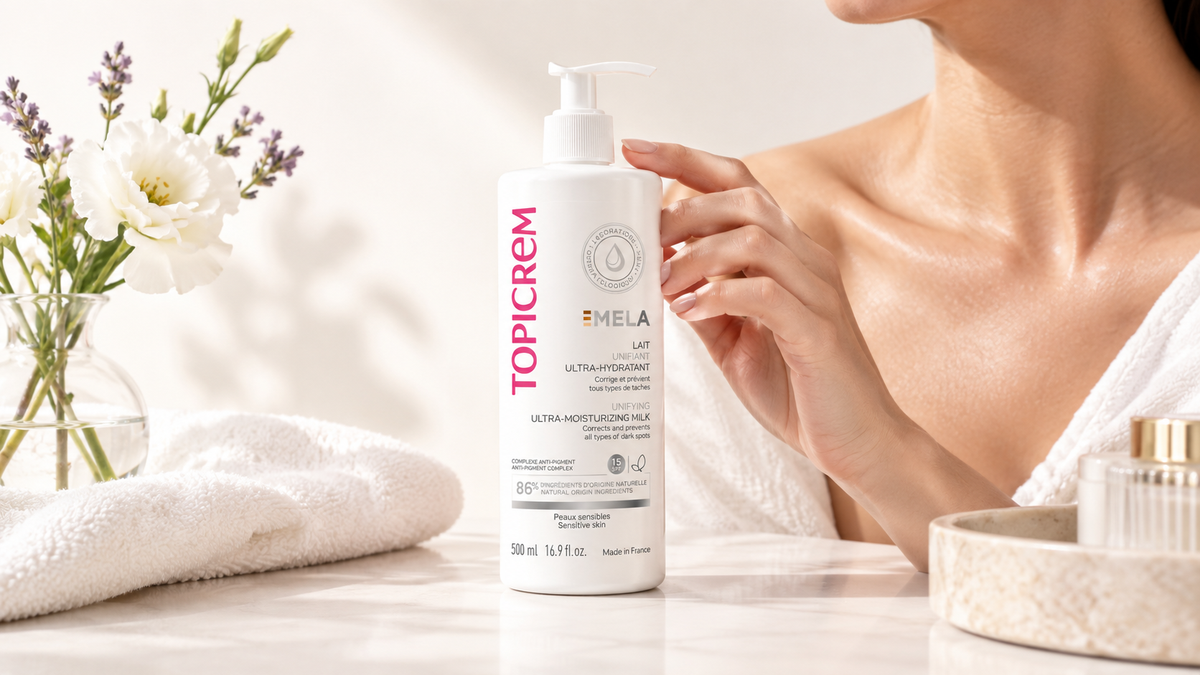
For daytime protection, a multi-tasking formulation like Topicrem MELA Unifying Ultra-Moisturizing Milk SPF 15 500ml bridges the gap between generous body hydration and facial-grade photoprotection. Designed by French dermatological laboratories, this fluid milk delivers generous moisture while providing broad-spectrum coverage that helps keep the exposed upper chest and neck looking comfortable and cared-for against everyday incidental sun exposure. Its generous pump format encourages unsparing, full-surface application so you never feel tempted to skimp on the collarbones or lower neckline.
 Topicrem MELA Unifying Ultra-Moisturizing Milk SPF 15 500ml$55.0 $64.0
 Grahams Face & Eyelid Eczema Cream 50g$16.95
 Grahams Natural C+ Cream Eczema & Dermatitis Relief 50g$18.0
 Bepanthen Antiseptic Cream Benzalkonium Chloride 500mcg/g 50g$12.9 $15.0
 Savlon Antiseptic Cream 75g$13.5
A step-by-step neck and chest ritual
To ensure your neck and décolletage receive proper care without overwhelming your routine, follow this streamlined, tactile sequence each morning and evening. Practicing intentional upward and outward strokes helps distribute product evenly without dragging on the delicate surface.
-
1. Cleanse with non-stripping warmth
Extend your gentle cream or oil cleanser downward over the throat and breastbone, rinsing with lukewarm water rather than hot shower streams.
-
2. Press hydrating essence onto damp skin
While your chest is still slightly moist, pat on your favorite humectant toner or essence using open palms to draw moisture into the epidermal layers.
-
3. Apply gentle upward sweeping motions
Dispense your moisturizer or emulsion and glide your hands from the collarbones up toward the jawline in broad, fluid strokes to minimize tugging.
-
4. Fan outward across the décolletage
Use the palms of your hands to spread remaining cream horizontally from the center of the sternum outward toward the shoulders and under the clavicles.
-
5. Seal with broad-spectrum photoprotection
Every morning, apply an even layer of fluid SPF over the entire exposed throat and upper chest, reaching out to the sides of the neck.
Active ingredients and careful application
While it is tempting to bring your entire array of facial exfoliants and concentrated actives down onto the décolletage, caution is essential. Because the skin on the neck has a thinner stratum corneum and a reduced lipid matrix, it absorbs active ingredients more rapidly and is far more susceptible to contact irritation, redness, and peeling. Strong chemical exfoliants such as high-concentration glycolic acid or unbuffered retinoids can easily leave this delicate skin feeling sensitised and uncomfortable if applied at facial frequencies.
When introducing actives to the neck and décolletage, start conservatively. Dilute concentrated retinoids by buffering them over a nourishing barrier cream, or limit active applications to once or twice a week. Humectants like glycerin and hyaluronic acid, combined with barrier-supportive physiological lipids like ceramides, squalane, and fatty acids, should form the cornerstone of your neck care. These ingredients help reinforce the skin's moisture envelope without the irritation or sensitivity that so frequently follows aggressive peeling.
Be equally mindful of common friction points. Stiff collars, synthetic scarves, and heavy wool sweaters can cause mechanical irritation against fragile neck skin, particularly when combined with drying indoor heat. Choosing breathable cotton or silk base layers helps preserve the hydration you build with your daily creams, allowing active emollients to cushion the skin throughout the day.
Daytime sun defense without the greasiness
The greatest obstacle most people cite when neglecting their neck and décolletage is product texture. No one enjoys the feeling of a heavy, tacky sunscreen transferring onto the collar of a favorite shirt or sticking to loose hair during the morning commute. This tactile friction leads many to simply skip sun protection on the chest altogether, leaving this area without the daily coverage that supports an even, comfortable complexion over time.
The solution lies in lightweight, fluid textures borrowed from French body-care expertise. High-grade moisturizing milks with incorporated sun filters, such as Topicrem MELA Unifying Ultra-Moisturizing Milk SPF 15 500ml, absorb quickly into the skin without leaving a greasy sheen or chalky white cast. This allows you to dress immediately after application while knowing your décolletage has the everyday sun coverage it deserves. Applying your sun-protective milk right after your morning shower ensures complete, seamless coverage before you put on your clothes.
Frequently asked questions
Frequently asked questions
Do I need a dedicated neck cream?
Not necessarily. A well-formulated, fragrance-free facial moisturizer or an ultra-hydrating body milk with barrier lipids and sun protection works beautifully for both areas.
Why does my neck skin get irritated so easily?
The skin on the neck is thinner and produces significantly less sebum than facial skin, making it more permeable and susceptible to irritation from potent actives or fragrances.
Can I use my facial retinol on my décolletage?
Yes, but proceed with caution. Use a smaller amount buffered with a rich moisturizer, and reduce frequency to once or twice weekly to avoid irritation.
How far down should I apply my morning sunscreen?
Apply sunscreen all the way down to the top of your breastbone and out toward your shoulders, covering any skin that will be exposed to ambient daylight.
Embracing a complete self-care perimeter
Skincare is most rewarding when it feels like an intuitive, nourishing act rather than an exhaustive list of rules. Remembering your neck and décolletage is not about correcting flaws; it is about extending the same kindness and protection you already offer your face to every part of your skin that meets the world. By smoothing your hydrating lotions downward and finishing with dependable photoprotection, you create a cohesive, radiant canvas that feels comfortable, supple, and beautifully supported every single day.