The Myth of 'One-Size-Fits-All' Moisturizer: Why Texture Matters More Than Ingredients
Upolife Editorial Team·
The universal moisturizer myth

We have been conditioned to shop for skincare as if we are reading a laboratory manifest. We scan the back of elegant cardboard boxes for high percentages of trendy acids, specific botanical extracts, and hyped active ingredients, believing that the magic lies solely in the chemical composition. But this ingredient-first mindset has obscured a fundamental truth of daily skin comfort: the physical structure of a formula matters far more than its ingredient list. The concept of a single, universal moisturizer that suits every face is a marketing convenience, not a biological reality. Your skin does not experience ingredients in a vacuum; it experiences texture. The way a cream spreads, sits, and interacts with your skin's surface lipids determines its true efficacy and how comfortable your skin will feel throughout the day.
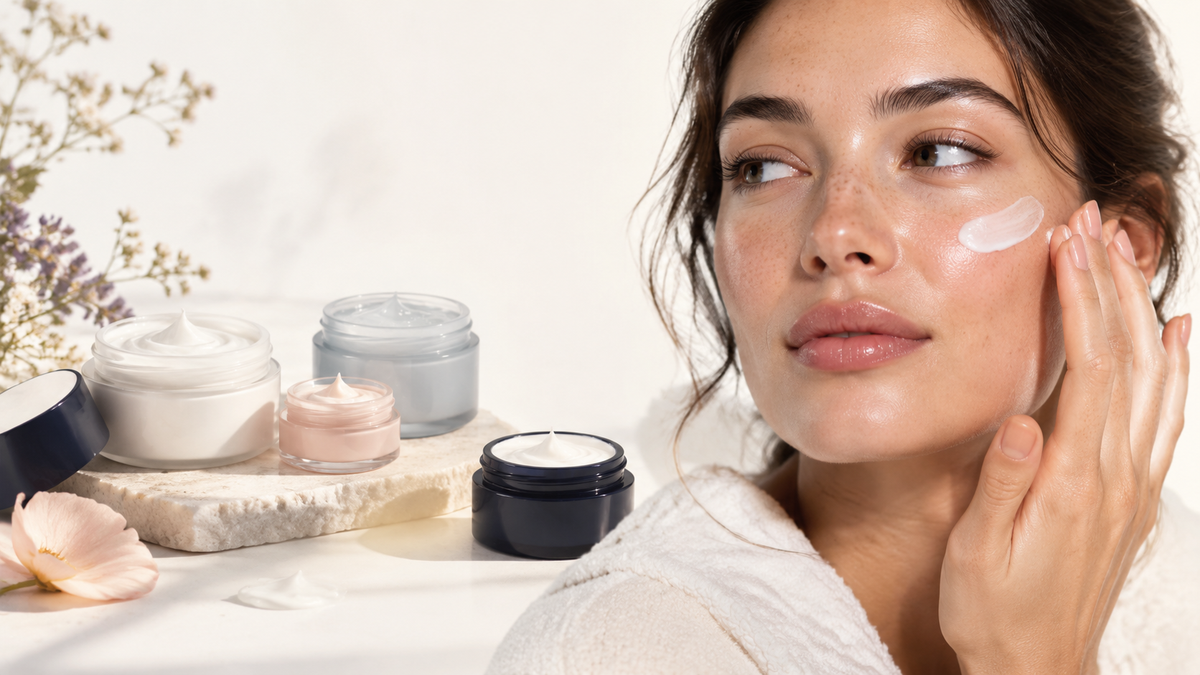
When a cream is formulated, its physical texture dictates how it sits on the skin surface, how quickly it evaporates, and how it interacts with your natural sebum. A lightweight fluid and a dense, rich balm might share several identical moisturizing agents, yet their behavior on your skin will be completely opposite. One may leave you feeling fresh and prepped for makeup, while the other might create a protective, cushion-like feel. Understanding this distinction is the key to moving past the frustrating cycle of buying highly recommended creams that simply do not feel right on your face. By learning to prioritize texture over trendy ingredients, you can build a more intuitive and responsive skincare routine.
The physics of skin compatibility
At its core, moisturizing is an exercise in surface physics. The outermost layer of your skin, the stratum corneum, acts as a delicate shield at the skin's surface. When this layer feels like it needs extra support, we turn to topical formulas inspired by its natural lipid composition. These formulas generally fall into three physical categories: humectants, which draw water into the skin; emollients, which soften and smooth the surface; and occlusives, which physically slow water evaporation. The magic of texture lies in how these three elements are emulsified together, creating a physical sensation that either integrates seamlessly with your skin or sits comfortably on top of it.
A fluid emulsion contains a high proportion of water and lightweight emollients, allowing it to spread effortlessly and disappear into the skin surface without leaving a heavy residue. This is ideal for skin that naturally produces sufficient sebum but needs a light layer of hydration to maintain its balance. Conversely, a rich balm or ointment contains minimal water—or none at all—relying instead on dense lipids and occlusives to create a physical layer. For dry or compromised skin, a light fluid evaporates too quickly, leaving the surface feeling parched within hours. The skin benefits from the physical presence of a dense, slow-absorbing texture to remain comfortable and protected throughout the day.
The allure of universal labeling
The promise of a single jar that can satisfy dry, oily, sensitive, and combination skin alike is incredibly alluring. It simplifies our shopping habits and promises an easy solution to a complex biological puzzle. However, this universal labeling is often more about marketing convenience than dermatological precision. Skin is a dynamic, living organ that responds constantly to stress, hormonal shifts, and environmental changes. A single texture cannot possibly address the needs of an oil-producing T-zone in mid-July while simultaneously comforting a dry, flaky cheek in mid-January. Accepting that your skin needs a library of textures rather than a single holy grail is the first step toward true skin comfort.
Decoupling ingredients from delivery
To understand why texture reigns supreme, consider how the same raw materials behave in different physical states. Glycerin, a classic humectant, is found in almost every moisturizer on the market. In a sheer, water-based gel, glycerin provides a quick burst of hydration that feels instantly cooling but offers very little lasting comfort in dry climates. In a thick, lipid-rich cream, that same glycerin is suspended in an oil-in-water emulsion that slows down its release, allowing it to keep skin feeling comfortable and cushioned for hours. The ingredient is identical, but the physical delivery system changes its performance entirely, illustrating how texture dictates the actual behavior of the formula.
This is why shopping by active ingredients alone often leads to disappointment. You might purchase a cream because it features a celebrated botanical extract, only to find that the base formula is far too heavy for your oily skin, leading to a congested feeling, or too light for your dry skin, leaving you tight and uncomfortable. By shifting your focus from what is in the tube to how the formula physically behaves on your fingers and face, you can curate a routine that feels like a bespoke fit rather than a compromise. It allows you to select products that harmonize with your skin's unique daily state.
The legendary French milk texture
In the world of Parisian beauty, heavy, over-engineered creams are rarely the default choice. Instead, French dermatologists and makeup artists have long favored the elegant simplicity of fluid milk-creams. These formulations strike a perfect balance, offering deep comfort without the weight of traditional heavy moisturizers. They are designed to sink in quickly, leaving a satin finish that mimics the natural texture of healthy, bare skin. This effortless approach to hydration is what gives French skincare its reputation for being both highly effective and incredibly pleasant to use on a daily basis.
The absolute gold standard of this category is the Embryolisse Lait-Crème Concentré Multi-Function Moisturizer 30ml. This iconic blue-and-white tube is a staple backstage at fashion shows and in French family bathrooms for a simple reason: its texture is incredibly versatile. It is a light, fluid cream that coexists beautifully with all skin types. On dry skin, it provides a comforting layer of hydration that softens dry patches; on oilier skin types, it absorbs cleanly without leaving a greasy film. Because of this unique fluid-to-cream consistency, it also functions beautifully as a primer, creating a smooth, hydrated canvas that allows makeup to glide on effortlessly without pilling or sliding, making it a true masterpiece of texture design.
The power of dense protective balms
While fluid milks are perfect for daily preparation and light hydration, there are moments when the skin requires a completely different physical sensation. When the weather turns cold, or when specific areas of the face and body become dry and rough, lightweight creams are simply not enough. The water in these light formulas evaporates too rapidly, failing to provide the lasting comfort that very dry skin craves. This is where dense, water-free or water-in-oil balms become essential, offering a physical layer of richness that lighter fluids simply cannot replicate.
A prime example of this protective texture is the Eucerin Aquaphor Baume Réparateur Skin Repair Balm 40g. Unlike a daily fluid, this balm has a rich, semi-solid texture designed to sit on top of the skin, creating a cushioning, breathable layer. It does not disappear immediately; instead, it provides a continuous, cocooning feel that makes dry, rough, or chapped areas feel comfortable and shielded from the elements. It is an indispensable tool for targeted application on lips, elbows, or any patch of skin that feels vulnerable and stripped of its natural softness, demonstrating the power of a heavy, occlusive texture.
Similarly, the Lucas' Papaw Ointment Multipurpose Balm 15g offers a dense, rich texture that relies on the physical properties of a heavy ointment base. This classic Australian import has earned a global following because its thick, protective consistency stays exactly where you apply it. It is ideal for delivering a cocooning sensation to highly localized areas, such as dry cuticles, chapped lips, or rough spots. The success of these balms is not due to a complex list of exotic ingredients, but rather their physical ability to coat, comfort, and soften the skin through a dense, occlusive texture that keeps skin feeling nourished for hours.
 Embryolisse Lait-Crème Concentré Multi-Function Moisturizer 30ml$13.5 $19.0
 Eucerin Aquaphor Baume Réparateur Skin Repair Balm 40g$8.4 $15.95
 Lucas’ Papaw Ointment Multipurpose Balm 15g$8.85
How to read a texture
Learning to read a formula's texture before applying it can save you months of trial and error. When exploring a new moisturizer, pay close attention to how it behaves when first squeezed from the tube. A formula that holds its shape like soft peaks of whipped cream is typically an oil-in-water emulsion, balanced to offer both hydration and a light, comfortable layer. If it flows easily like a lotion, it is a high-water fluid designed for rapid absorption and a weightless finish. If it is dense, translucent, and requires the warmth of your fingers to melt, it is an anhydrous balm designed for intense, lasting comfort. Understanding these visual and tactile cues allows you to predict how a product will perform on your skin before you even apply it.
Your skin's needs are not static, which is why relying on a single moisturizer year-round is often a mistake. During the humid summer months, your skin naturally feels more balanced, making a light fluid like Embryolisse Lait-Crème Concentré the perfect choice to keep your complexion fresh and comfortable. In the depths of winter, when indoor heating strips moisture from the air, introducing a dense balm like Eucerin Aquaphor as part of your nighttime routine can make a noticeable difference in how your skin feels the next morning. By matching the physical weight of your skincare to your environment, you work with your skin rather than against it, ensuring comfort in every season.
The sensory joy of skincare
Ultimately, skincare should be a source of daily pleasure, not a chore or a mathematical equation. When you find a moisturizer with a texture that perfectly complements your skin type, the application process becomes a moment of genuine self-care. A beautifully formulated fluid that melts into the skin or a rich balm that wraps dry patches in comfort provides immediate sensory feedback that no ingredient list can match. By listening to your skin and paying attention to how different textures make it feel, you can move away from rigid rules and embrace a more intuitive, enjoyable approach to beauty. Texture is not just a delivery system; it is the very heart of the skincare experience.
Frequently asked questions
Can oily skin use a rich cream texture?
Yes, but it depends on the formulation. While oily skin typically thrives with lightweight fluids, a rich cream can be beneficial during cold weather or nighttime recovery, provided it does not contain highly occlusive waxes that feel heavy on the skin surface.
Why does my moisturizer pill when I apply makeup?
Pilling usually happens when a moisturizer's texture is too heavy or has not had enough time to absorb before makeup application. Switching to a fluid, satin-finish milk like Embryolisse Lait-Crème Concentré can help, as its physical texture is designed to double as a smooth primer.
Should I use different textures for day and night?
Many people find this approach highly effective. A lighter, fluid texture during the day keeps the skin comfortable and prepped for daily activities, while a richer, more occlusive balm or cream at night helps support the skin's natural recovery process while you sleep.