Urea: More Than Just a Moisturizer – Keratolytic and Hydrating Properties

The dual nature of urea
In the taxonomy of skincare ingredients, urea occupies an extraordinary and singular position. While mainstream beauty discourse frequently groups it alongside conventional humectants like glycerin or hyaluronic acid, cosmetic chemists and European dermatologists understand that urea operates within a class of its own. It is an authentic biological component of healthy tissue, synthesized naturally by the body as an indispensable pillar of the skin's natural moisturizing factor. Within the outermost layers of the stratum corneum, endogenous urea accounts for roughly seven percent of the water-binding matrix, directly influencing cutaneous flexibility, enzymatic activity, and barrier integrity. When skin becomes persistently dry, flaky, or rough, biological analysis routinely reveals a precipitous drop in natural urea reserves, leaving the epidermis structurally compromised and unable to retain ambient moisture.
What elevates urea beyond traditional hydrators is its concentration-dependent duality. At modest physiological percentages, it acts as a remarkably efficient water-trapping humectant, drawing moisture into dehydrated corneocytes and enhancing the elasticity of the epidermal matrix. Yet, when formulated at higher concentrations, urea undergoes a functional metamorphosis, activating potent keratolytic properties that gently dissolve the protein linkages binding dead surface cells together. This dual capacity to simultaneously hydrate and exfoliate allows urea to refine uneven, thickened skin texture without stripping the barrier of essential moisture. Across French and German pharmacy dispensaries, where clinical efficacy is prized over fleeting marketing trends, urea-based preparations have served as quiet, foundational staples for decades.
Molecular anatomy of an endogenous hydrator
To comprehend how urea functions within the skin, one must examine its molecular architecture. Chemically recognized as carbamide, urea is an exceptionally small, organic diamide of carbonic acid with the formula CH4N2O. Because of its diminutive molecular weight, it easily navigates the intercellular lipid matrix of the stratum corneum, penetrating deeper than voluminous polymers that remain stranded on the surface. Once situated within the upper epidermal strata, urea demonstrates profound hygroscopic behavior, forming dense networks of hydrogen bonds with ambient water molecules. It effectively creates a localized reservoir of hydration, drawing water from the viable deeper layers of the epidermis and locking it inside the interior compartments of mature corneocytes.
Furthermore, urea fundamentally influences the physical state of stratum corneum lipids. In severely dry skin, the intercellular lipid bilayers often transition from an organized, pliable liquid-crystalline state into a rigid, brittle crystalline arrangement, resulting in visible cracking and barrier failure. By integrating seamlessly into the surrounding water phases of these lipid lamellae, urea preserves structural fluidity, preventing crystallization and supporting the skin's innate water retention capacity. Unlike standard humectants that merely hold surface water, urea actively modulates the physical conformation of keratin filaments, unfolding compacted protein chains to expose hidden water-binding sites. The result is a profound, lasting restoration of suppleness that topical oils and simple emollients cannot replicate independently.
The keratolytic shift at higher thresholds
While lower doses of urea focus primarily on hygroscopic water capture, increasing the concentration fundamentally shifts its biochemical interaction with the skin's protein architecture. At thresholds approaching ten percent and above, urea acts as a selective chaotropic agent. In cosmetic chemistry, a chaotropic agent is a compound capable of disrupting the delicate hydrogen bonds and non-covalent interactions that stabilize the secondary, tertiary, and quaternary structures of structural proteins. In the stratum corneum, this means urea selectively destabilizes the dense, rigid matrix of keratin fibers and diminishes the cohesion of desmosomes—the specialized protein complexes that physically anchor adjoining dead corneocytes to one another.
This targeted breakdown of cellular adhesion is what defines urea as a premier keratolytic agent. However, its mode of exfoliation diverges completely from traditional chemical peeling agents like alpha-hydroxy acids or beta-hydroxy acids. While glycolic or salicylic acids lower cutaneous pH to break desmosomal bonds through chemical dissolution—often provoking localized inflammation, flushing, or irritation—urea operates through mechanical protein unfolding at a skin-compatible, neutral pH. As the tight protein bridges soften, dead, hyperkeratotic skin cells detach naturally and evenly, shedding through physiological desquamation rather than abrupt chemical peeling. Because this structural softening occurs simultaneously with deep water absorption, the skin beneath is revealed to be extraordinarily soft, supple, and hydrated rather than raw or sensitized.

Concentration dynamics in daily skincare
Choosing the right urea product requires a nuanced understanding of concentration dynamics, as the percentage dictates whether a formulation behaves predominantly as a restorative hydrator or a clarifying exfoliator. For areas of the body that experience chronic daily moisture loss without extreme thickening, a five percent concentration provides the ultimate physiological baseline. A prime illustration of this precision engineering is found in the Eucerin UreaRepair Hand Cream 5% Urea 75ml. Formulated specifically for hands subjected to repeated washing, environmental exposure, and detergent contact, this five percent emulsion reinforces the natural lipid shield while restoring hydration without leaving a greasy, occlusive film. It delivers sustained moisture, smoothing micro-fissures and supporting epidermal flexibility throughout daily wear.
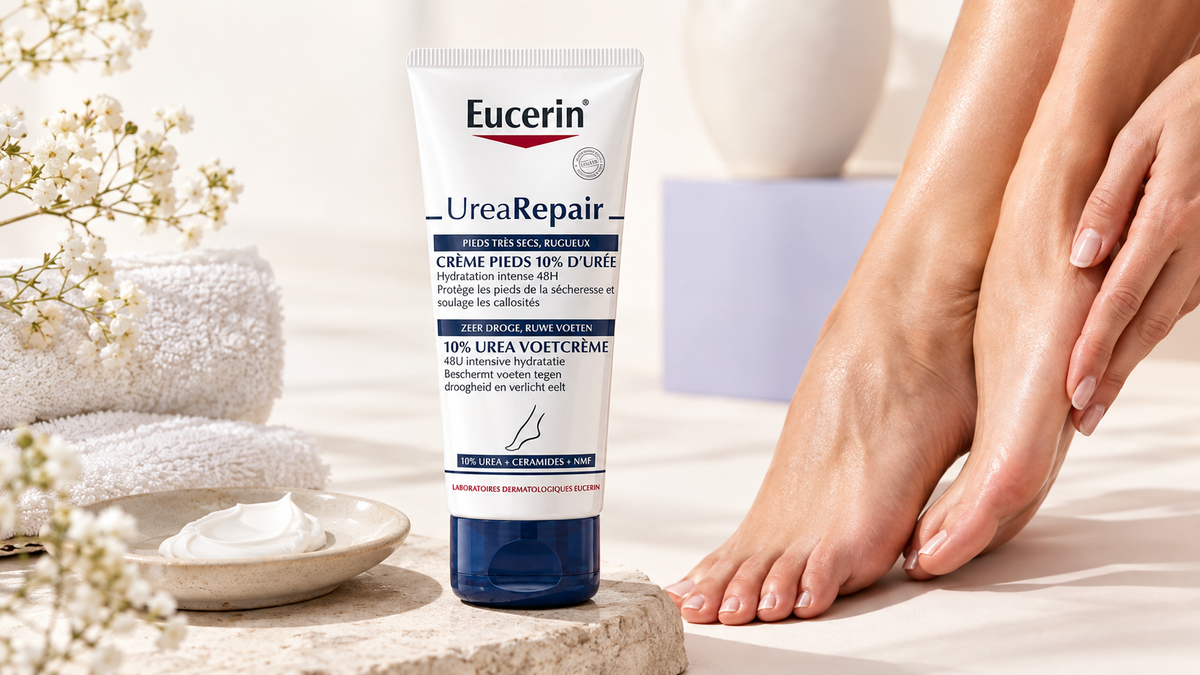
When dealing with stubborn, hyperkeratotic conditions—such as rough elbows, thick calluses, or parched, cracked heels—a ten percent concentration becomes the clinical standard for visible renewal. Formulations at this potency actively target accumulated cellular debris while infusing the underlying tissue with intense hydration. The Mixa Cica Repair Cream 10% Urea for Very Dry Rough Skin 400ml exemplifies French pharmacy mastery, deploying a ten percent concentration in a generous, soothing body cream designed to visibly smooth granular skin texture and rough patches across broad body surfaces. For localized extremity care where the stratum corneum is naturally thickest, the Eucerin UreaRepair Foot Cream 10% Urea 100ml provides intensive desquamation, softening dry calloused heels and restoring comfortable suppleness to stressed feet.
 Eucerin UreaRepair Foot Cream 10% Urea 100ml$12.95
 Eucerin UreaRepair Hand Cream 5% Urea 75ml$12.0
 Eucerin DermoCapillaire Calming Urea Scalp Treatment 100ml$20.9 $25.0
 Mixa Cica Repair Cream 10% Urea for Very Dry Rough Skin 400ml$22.7 $27.0
Targeted application for scalp care
The therapeutic utility of urea extends well beyond the hands, feet, and body; it has emerged as a transformative solution within targeted scalp care. The scalp is a specialized extension of the skin, characterized by a dense concentration of sebaceous glands and hair follicles, yet it remains intensely vulnerable to barrier degradation, desquamation irregularities, and persistent dryness. When the scalp barrier falters, dead corneocytes accumulate around follicle bases, manifesting as dry flakes, tight discomfort, and surface irritation. Traditional anti-flake shampoos frequently rely on aggressive clarifying surfactants that strip surface oils, inadvertently exacerbating baseline scalp dehydration and creating a cycle of rebound dryness.
A specialized leave-on treatment bridges this gap by delivering targeted moisture and micro-exfoliation without harsh cleansing agents. The Eucerin DermoCapillaire Calming Urea Scalp Treatment 100ml is specifically designed to address dry, tight, and uncomfortable scalp conditions. By harnessing urea in a lightweight, non-greasy leave-on liquid, it gently loosens dry surface flakes around the roots while drenching the scalp's stratum corneum in essential hydration. Because the formulation is absorbed without leaving oily residues or weighing down the hair fiber, it maintains the physiological balance of the scalp barrier, providing enduring comfort and reinforcing scalp health over consistent applications.
Synergy with barrier lipids and emollients
In European cosmetic formulation science, urea is rarely deployed in isolation. While urea's intrinsic hygroscopic and keratolytic properties are formidable, maximizing its dermatological efficacy requires pairing it with complementary barrier lipids and skin-identical emollients. When dead, hyperkeratotic cells are loosened and detached, the newly exposed stratum corneum requires immediate lipid protection to prevent rapid transepidermal water loss. Formulators frequently combine urea with ceramides, physiological cholesterol, and essential fatty acids. This lipid envelope seals the pathway against moisture escape, locking the newly bound water molecules within the viable tissue while supporting the natural cohesion of the regenerated stratum corneum.
Additionally, pairing urea with auxiliary moisturizing agents like lactic acid, sodium lactate, or glycerin produces an amplified biomimetic hydration network. These combinations mirror the multi-component composition of the skin's endogenous natural moisturizing factor, ensuring that water molecules are captured across varying ambient humidity levels. Emollients such as squalane, shea butter, and mineral-derived waxes act as soothing cushions within these emulsions, offsetting any potential stinging sensations that raw urea might provoke on micro-fissured tissue. Through this meticulous balance of active keratolytics, physiologic humectants, and restorative lipids, continental pharmacy formulations deliver intensive resurfacing while keeping the moisture barrier profoundly resilient.
Sensorial refinement in European pharmacy formulations
Historically, formulating with urea presented significant cosmetic challenges that deterred many commercial manufacturers outside of medical contexts. In high concentrations, unbuffered urea in aqueous solutions can slowly hydrolyze into ammonia, leading to an unpleasant alkaline odor, shifting formulation pH, and compromising shelf stability. Furthermore, early therapeutic urea ointments were notoriously heavy, sticky, and sensorially displeasing, discouraging consistent patient compliance. Consumers were frequently forced to choose between the therapeutic efficacy of a sticky medical paste and the sensorial elegance of a lightweight, yet functionally ineffective, cosmetic lotion.
French and German dermatological laboratories revolutionized this space by pioneering advanced stabilization systems and sophisticated emulsion architectures. By utilizing dual-phase buffering complexes, contemporary European formulators ensure that urea remains completely stable, scent-free, and active at its optimal physiological pH throughout its shelf life. Advanced emulsification techniques allow high concentrations—such as the ten percent found in Mixa and Eucerin treatments—to glide smoothly onto the skin, absorbing quickly without greasy tackiness or chalky residue. This marriage of pharmaceutical-grade chemical stability with luxurious, velvety finishes represents the zenith of European skincare craft, making high-potency daily body care an indulgent ritual rather than an aesthetic compromise.
Navigating skin compatibility and tolerance
Despite its profound benefits, understanding how to incorporate urea into a personalized regimen is critical for achieving optimal tolerance. Because urea is an endogenous human metabolite, it is widely regarded as well-suited to skin and is generally considered gentle enough for regular use. However, its small molecular profile and chaotropic properties mean that when applied to open micro-cracks, weeping fissures, or severely excoriated skin, it can cause a transient, sharp stinging sensation. This is a common sensory response that many people notice on compromised skin and typically settles quickly as the product absorbs.
To introduce urea comfortably into your daily body or scalp care ritual, simple protocol adjustments make a significant difference:
- Begin application on intact, dry, or slightly damp skin immediately following bathing, which allows the emollient base to spread evenly and softens the initial osmotic transition.
- If addressing cracked heels or severely dry hands, apply a rich five percent formula for several consecutive days before graduating to intensive ten percent formulations like Eucerin UreaRepair Foot Cream.
- For targeted scalp applications, apply section by section onto a clean scalp, gently pressing the product into the roots with your fingertips rather than rubbing aggressively.
- Avoid applying high-potency body formulations containing ten percent urea to delicate facial skin, where the thinner stratum corneum demands lower concentrations or specialized facial hydrators.
Frequently asked questions
Can urea products be used safely alongside other exfoliating acids like glycolic or salicylic acid?
While urea can be used in the same broader skincare routine, layering high concentrations of urea directly over chemical exfoliants is generally unnecessary and may provoke sensitivity. Because ten percent urea already provides gentle, selective keratolytic desquamation, it is best to alternate days or reserve chemical acids for targeted areas while relying on urea for intensive hydration and smoothing.
Why does high-concentration urea sometimes sting upon initial application?
A temporary stinging sensation usually occurs when urea is applied to broken, cracked, or severely compromised skin with active micro-fissures. Urea creates an immediate osmotic gradient across the damaged barrier, stimulating sensitive local nerve endings. As the skin barrier repairs itself over several days of consistent use, this transient sensation typically subsides completely.
Is a ten percent urea cream suitable for use on facial skin?
Ten percent urea is generally formulated for the thicker, more resilient stratum corneum found on the body, hands, and feet. Applying ten percent urea to the delicate skin of the face may lead to over-exfoliation or localized tingling, so it is preferable to look for facial moisturizers formulated specifically with lower concentrations between two and five percent.
What makes European pharmacy urea formulations distinct from standard store moisturizers?
European pharmacy formulations undergo rigorous dermatological testing to stabilize urea against hydrolytic breakdown and pH shifts, ensuring clinical efficacy and a completely neutral scent. In addition, brands like Eucerin and Mixa combine pure urea with skin-identical lipids, ceramides, and lactate, creating biomimetic emulsions that actively restore the moisture barrier rather than simply masking surface dryness.